Modern cars are packed with sensors and control units that watch over everything from the engine and gearbox to the brakes and exhaust. When one of them spots a problem, your car quietly stores a fault code. Sometimes it also lights up the dashboard. Sometimes it says nothing at all and simply starts to feel a little different to drive.
A car diagnostic check is how a mechanic reads that stored information and turns it into a clear answer. The real question for most drivers is timing. Book too late and a small fault can grow into a breakdown. Book at the right moment and you can sort it out calmly, on your own schedule.
This guide covers the warning signs to watch for, the situations where a check makes sense even when nothing looks wrong, what actually happens during the test and how a mobile diagnostic service in Bournemouth can bring the answers to your driveway.
The Short Answer: When Should You Book a Diagnostic Check?
You should book a car diagnostic check when:
- A warning light stays on, or flashes, on your dashboard
- Your car loses power, hesitates, idles roughly or stalls
- The engine is harder to start than usual
- Your fuel economy drops without an obvious reason
- You notice new noises, smells or smoke
- You are about to buy a used car
- You want peace of mind before an MOT, a service or a long journey
- A fault keeps appearing and disappearing
If any of those sound familiar, our vehicle diagnostics service in Bournemouth can find the cause quickly. The sections below explain each situation in more detail.
What Is a Car Diagnostic Check?
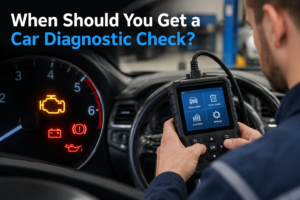
A car diagnostic check connects specialist equipment to your vehicle’s onboard computer through the diagnostic port, which is usually found under the dashboard near the steering wheel. The equipment reads fault codes stored by the engine control unit and by other modules, such as the ones that manage the brakes, airbags, transmission and emissions system.
A good diagnostic check goes further than reading a code. The technician looks at live data from the sensors, compares it with what a healthy car should show and then uses experience to work out what is really going on. A code tells you which system reported a problem. It does not always tell you which part has failed. That interpretation is what turns a printout into a proper diagnosis.
Warning Signs That Mean You Need a Diagnostic Check
1. A Warning Light Is On
This is the most common reason drivers book a check, and the most obvious. Dashboard lights are your car’s way of saying that a monitored system has detected something outside its normal range.
Colour gives you a rough guide to urgency:
- Red usually means stop safely as soon as you can and seek help. Examples include low oil pressure, an overheating engine or a serious brake system fault.
- Amber or orange usually means something needs attention soon. Examples include the engine management light, ABS light, airbag light and emissions related warnings.
- Green or blue lights are normally just informing you that a feature is switched on.
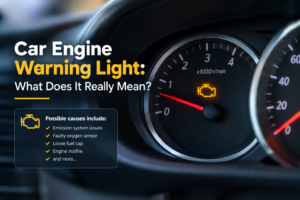
A steady engine management light is a reason to book a check at your earliest convenience. A flashing engine light is more serious. It often points to a significant misfire, which can damage the catalytic converter if you keep driving hard. If it flashes, ease off, avoid heavy acceleration and get the car looked at as soon as possible.
Our guide to the engine warning light goes deeper into what each symbol can mean.
2. Reduced Power or Limp Mode
If your car suddenly feels flat, refuses to rev past a certain point or displays a message about reduced performance, it may have entered limp mode. This is a protective setting that limits power to prevent further damage. It is usually triggered by a fault with a sensor, the turbocharger, the throttle or the fuel system. A diagnostic check is the quickest way to find out which.
3. Rough Idling, Hesitation or Misfiring
A shaky idle, a stumble when you pull away or a jerky feel under acceleration can all point to ignition, fuel or air intake problems. These faults often start small and get worse. Reading the fault codes and live engine data helps identify the affected cylinder or component without guesswork. You can read more in our article on what causes an engine misfire.
4. Starting Problems or Stalling
If the engine cranks slowly, takes several attempts to fire or cuts out at junctions, do not assume it is only the battery. Starter motors, fuel delivery, ignition components and sensors can all play a part. If your battery is the culprit, our battery replacement service can test and fit a new one at your home or workplace. A diagnostic check makes sure the battery really is the root of the problem before anything is replaced.
5. A Drop in Fuel Economy
When your car starts using noticeably more fuel for the same journeys, something is making the engine work harder than it should. Faulty oxygen sensors, a sticking thermostat, a leaking injector or an underperforming mass airflow sensor are common examples. Diagnostics can spot these early, often before a warning light appears.
6. Unusual Noises
Knocking, rattling, ticking, whining, squealing and grinding are all worth investigating. Some noises are mechanical and need a hands on inspection, while others are linked to sensors or control modules. A diagnostic check helps your mechanic narrow down the source quickly. If the noise appears when braking or going over bumps, it may be worth combining the check with a look at your brakes or suspension and shock absorbers.
7. Strange Smells or Smoke
A burning smell can suggest overheating or an electrical fault. A sweet smell can point to a coolant leak. A strong smell of fuel or visible smoke from the exhaust is never normal. Unusual smells are a sign to stop driving if it is safe to do so and have the vehicle checked. Exhaust and emissions related faults can also be investigated through our exhaust and emission repairs service once the diagnosis is complete.
8. Gearbox, Electrical or Comfort System Oddities
Jerky gear changes, delayed engagement, a stop start system that suddenly stops working, windows that behave oddly, an air conditioning system that no longer cools or an infotainment screen that keeps resetting can all be linked to stored faults. Modern cars rely on a network of modules that talk to each other, so a small communication fault can show up in unexpected places. If the cabin is not cooling properly, our air conditioning service and re gas can follow on from the diagnosis.
Times to Book a Diagnostic Check Even When Nothing Seems Wrong
Many drivers wait for a warning light. A smarter approach is to use diagnostics proactively in these situations.
Before an MOT or Service
Faults linked to the engine management, ABS or airbag systems can cause an MOT failure, and emissions problems can affect the test result. Booking a check beforehand gives you time to deal with issues calmly instead of facing a retest. It also pairs well with a full or interim service, because a service looks at general wear and upkeep while diagnostics looks at what the electronics are reporting.
Before Buying a Used Car
A used car can look spotless and still have stored faults, past warning light history or electronic issues that a short test drive will not reveal. A diagnostic check before you commit gives you a much clearer picture of what you are really buying, and it gives you something concrete to discuss with the seller.
Before a Long Journey
If you are planning a motorway trip or a holiday drive, a diagnostic check is a sensible addition to your pre journey routine along with tyres, fluids and lights. Our article on preparing your car for a long journey from Bournemouth covers the other checks worth doing.
After a Repair, Battery Change or Electrical Work
Some repairs leave stored fault codes behind or require systems to be reset or relearned. A follow up check confirms that the repair has worked and that nothing else was triggered along the way. This is especially useful after major work such as a cambelt change, when timing and engine data should be verified.
When a Fault Comes and Goes
Intermittent problems are frustrating. A light that appears for a day and vanishes, or a symptom that only shows up on cold mornings, can still leave evidence behind. Stored and historic fault codes help a technician see what the car noticed even when the symptom has disappeared. Never assume a light that has switched itself off means the problem has gone.
At the Change of Season
Damp autumn mornings, cold snaps and wet winter roads put extra strain on batteries, sensors, wiring and connectors. If your car has started to feel a little off as the weather changes, a diagnostic check can catch weak points before they leave you stranded. A fresh oil and filter change at the same visit is a simple way to give the engine a good start to the colder months.
What Happens During a Car Diagnostic Check?
Knowing what to expect takes the mystery out of the process. A thorough diagnostic visit usually follows these stages:
- A conversation about symptoms. You explain what you have noticed, when it happens and whether anything changed recently. This context matters a great deal.
- Connecting the equipment. The technician plugs a diagnostic tool into the vehicle’s port and begins a full system scan across the engine, transmission, brakes, airbags and other modules.
- Reading fault codes. Current, pending and stored codes are recorded so nothing is overlooked.
- Checking live data. Sensor readings are reviewed while the engine runs to see whether values sit where they should.
- Testing and confirming. Where needed, the technician verifies the suspected fault with further checks, because replacing parts based on a code alone is a gamble.
- Explaining the results. You receive a plain English explanation of what was found, what is urgent, what can wait and what your options are.
At Mechanic Bournemouth, our equipment reads all fault codes and our team talks you through the findings clearly, so you always understand what is happening with your car.
What a Diagnostic Check Can and Cannot Do
Being honest about limits builds trust, so here is the reality.
A diagnostic check can:
- Identify which system has logged a fault and what the fault is likely to be
- Reveal stored, pending and historic codes
- Show live sensor data to support a diagnosis
- Help you decide whether a car is safe to keep driving
- Confirm that a repair has worked
A diagnostic check cannot:
- Fix the fault by itself. It finds the cause, and a repair is a separate step.
- Replace a physical inspection. Worn brake pads, tired suspension and leaking seals need to be seen and tested by hand.
- Make a code disappear permanently. Clearing a code without fixing the cause means it will usually return.
Can You Keep Driving With a Warning Light On?
It depends on the light and the symptoms.
- Red warning light: stop as soon as it is safe and call for help. Do not continue driving.
- Flashing engine light: reduce speed, avoid heavy acceleration and get the car checked urgently.
- Steady amber light with no change in how the car drives: you can usually drive carefully to a garage, but do not leave it for weeks.
- Any light accompanied by loss of power, strange noises, smoke or a burning smell: stop driving and arrange a check straight away.
If you are unsure, it is always safer to ask. Our team can advise you over the phone before you decide whether to drive the car or have us come to you.
Why a Mobile Diagnostic Service Makes Sense in Bournemouth
You do not always need to take your car to a garage to find out what is wrong with it. Our fully equipped mobile unit carries professional diagnostic technology directly to you, which is ideal when a warning light has just come on and you would rather not risk driving further, or when you simply cannot spare time away from home or work.
Whether you live in Bournemouth, Poole, Christchurch or elsewhere in Dorset, we can come to your home or workplace and work on all makes and models, from everyday hatchbacks and family saloons to 4x4s and vans. Our team has more than 15 years of experience and is available Monday to Saturday, from 8am to 8pm.
Frequently Asked Questions About Car Diagnostic Checks
Do I need a warning light to book a diagnostic check?
No. A warning light is the most obvious reason, but a check is also useful for unexplained changes in performance, before buying a used car, before an MOT or long trip and when a fault keeps returning.
How long does a diagnostic check take?
Reading the codes is quick. A full diagnosis can take longer, depending on the symptom and how deeply the fault needs to be investigated. Your mechanic can give you a realistic idea once they have seen the car.
How often should I get a diagnostic check?
There is no fixed schedule for every car. A sensible approach is to book one whenever something changes, and also as part of regular servicing, before an MOT or before a long journey, particularly if the car is older or has a high mileage.
Will a diagnostic check tell me exactly which part to replace?
It points you firmly in the right direction, but a code alone is not always the full story. Good diagnostics combines the codes, live data and further testing so that the right part is replaced the first time.
Can a diagnostic check be done at my home?
Yes. Our mobile service brings professional diagnostic equipment to your home or workplace across Bournemouth, Poole, Christchurch and the wider Dorset area.
Is it safe to clear a fault code myself?
Clearing a code removes the message but not the cause. The light will normally return, and you may also erase useful information that a mechanic could have used to find the problem. It is better to have the fault diagnosed first.
Do diagnostic checks work on every make and model?
Our team works on all makes and models, including hatchbacks, saloons, 4x4s, vans and performance vehicles.
Final Thoughts: Do Not Wait for a Breakdown
The best time for a car diagnostic check is as soon as your car tells you something is wrong, and often just before it has to. A steady warning light, a change in how the car drives, a new noise or smell, a used car purchase or a big journey ahead are all good moments to book one.
If you are in Bournemouth, Poole, Christchurch or anywhere nearby in Dorset and want clear answers about your car, our team is ready to help. Explore our full range of automotive services, learn more about us or contact Mechanic Bournemouth to book your diagnostic check today.