You pull away from the lights on Poole Road and the car shudders. It hesitates, coughs and feels like it has lost its rhythm. Maybe the engine light has come on, or maybe it hasn’t. Either way, something is wrong, and there is a good chance your engine is misfiring.
The good news is that most misfires have a clear cause and a straightforward fix when they are caught early. The bad news is that driving on a misfire can damage other parts of your car quickly. This guide explains what a misfire is, what causes it, how to tell it apart from other problems, what you can safely check yourself and how it gets fixed.
Quick Answer: What Causes an Engine Misfire?
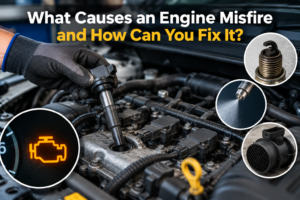
An engine misfire happens when one or more cylinders fail to burn their air and fuel mixture properly. Every cylinder needs three things at exactly the right moment: a strong spark, the right amount of fuel and enough clean air, all inside a cylinder that holds pressure. When any one of these fails, the cylinder stops contributing power and the engine runs unevenly.
The most common causes are worn spark plugs, failing ignition coils, clogged fuel injectors, air leaks, faulty sensors and, less often, internal engine wear. The fix depends entirely on which of these is responsible, which is why proper diagnosis comes before any repair.
What Is an Engine Misfire?
Your engine works like a team of rowers. Each cylinder fires in a set order, and the rhythm keeps everything smooth. When one cylinder misses its turn, the others carry on without it. The result is an imbalance you feel as shaking, stumbling or a sudden loss of power.
There are two kinds of misfire worth knowing about:
- Intermittent misfires come and go. They might only show up when the engine is cold, when it is damp or when you accelerate hard.
- Constant misfires happen all the time and are usually easier to trace, because the fault is present every time the engine runs.
When a cylinder misfires, unburnt fuel is pushed into the exhaust. That raw fuel is what makes misfires harmful to your catalytic converter, which is why they should never be ignored.
Common Signs Your Engine Is Misfiring
Misfires are rarely subtle, but they can start small. Watch for these:
- Rough or lumpy idle. The car shakes or pulses when you are stopped at traffic lights or in a queue.
- Hesitation or jerking when accelerating. The car feels flat, or surges and then catches.
- Loss of power. Hills and overtaking feel harder than usual.
- Stalling. Especially at low speed or when coming to a stop.
- Popping, spluttering or coughing sounds. You may hear it from under the bonnet or the exhaust.
- Worse fuel economy. You are filling up more often with no change in how you drive.
- A smell of petrol. Unburnt fuel is leaving the exhaust.
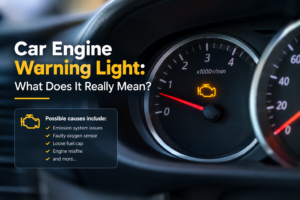
- An engine warning light. Steady or flashing.
Some misfires do not trigger a warning light straight away. A mild or occasional misfire may only store a pending fault in the car’s computer. If you can feel the car shaking, trust what you feel over the dashboard.
Steady Light or Flashing Light: What the Warning Means
Modern cars detect misfires by monitoring tiny changes in crankshaft speed. When a misfire is detected, the engine control unit stores a fault code.
- P0300 means a random or multiple cylinder misfire.
- P0301 to P0308 point to a specific cylinder. P0302, for example, means cylinder 2.
The light itself tells you how urgent the situation is:
- A steady light means a fault has been logged. Get the car checked soon and avoid long or hard journeys.
- A flashing light means a severe misfire is happening right now and is actively harming the catalytic converter. Pull over safely, switch off and arrange recovery or a mobile mechanic to come to you.
A code tells you which cylinder is affected, but it does not tell you why. That is where proper diagnosis comes in. If your warning light is on and you are not sure what it means, our guide on what a car engine warning light really means explains the different types.
What Causes an Engine Misfire? The Main Culprits
Most misfires fall into five groups: ignition, fuel, air, sensors and mechanical wear. Here is each one in plain terms.
1. Ignition System Faults
The ignition system creates the spark that lights the fuel. This is the most common source of misfires on petrol cars, and most workshops start here.
- Worn spark plugs. The electrodes wear down, the gap widens and the spark weakens until it can no longer ignite the mixture reliably. Spark plugs are a service item with a set replacement interval, and overdue plugs are one of the most frequent causes of misfires.
- Failing ignition coils. Most modern cars have one coil sitting on top of each spark plug. A coil turns the battery’s low voltage into the tens of thousands of volts needed for the spark. Coils live in a hot engine bay, and when one weakens or fails, its cylinder loses spark.
- Perished HT leads. On older cars, thick leads carry the spark to each plug. If the insulation cracks, the spark can leak away before it reaches the plug, often worse in damp weather.
2. Fuel Delivery Problems
Even with a perfect spark, the cylinder needs the right amount of fuel at the right time.
- Clogged or faulty fuel injectors. Deposits can partly block an injector, so the cylinder runs short of fuel. Short journeys and stop start town driving make this more likely.
- A weak fuel pump or blocked fuel filter. Low fuel pressure starves the injectors, and misfires tend to appear under load, such as on hills or at motorway speeds.
- Poor quality or wrong fuel. Contaminated fuel burns unevenly and can cause hesitation or misfires almost straight after filling up.
3. Air Intake and Vacuum Leaks
Your engine measures the air coming in and adds fuel to match. If extra air sneaks in through a leak, the mixture becomes too lean, meaning too much air for the fuel available.
- Cracked vacuum hoses or a leaking intake manifold gasket. These often cause a rough idle that smooths out as revs rise, sometimes with a faint hiss from under the bonnet.
- A dirty or blocked air filter. This restricts airflow and upsets the mixture.
- A sticking EGR valve. This lets exhaust gas into the intake at the wrong time and disturbs combustion.
4. Sensor Failures
The engine management system relies on sensors to decide how much fuel to inject and when to fire the spark. When one gives a bad reading, the whole process drifts.
- Crankshaft and camshaft position sensors tell the computer where the engine is in its cycle. If they fail, spark and fuel timing go wrong.
- Mass airflow and manifold pressure sensors measure incoming air. Dirt or failure leads to the wrong amount of fuel.
- Oxygen sensors monitor exhaust gases, and a faulty one can make the mixture too rich or too lean.
- Coolant temperature sensors help set the mixture for cold starts, so a fault here can cause misfires when the engine is cold.
5. Mechanical and Compression Problems
Each cylinder has to seal tightly so the mixture can be squeezed before it ignites. If pressure leaks away, the cylinder cannot make proper power, no matter how good the spark and fuel are.
- Worn piston rings let pressure escape past the piston. You may notice smoke from the exhaust and reduced power.
- Burnt or leaking valves stop the cylinder sealing.
- A leaking head gasket can let pressure pass between cylinders or let coolant into the combustion chamber. Warning signs include coolant loss, white exhaust smoke and a milky residue under the oil filler cap.
- Timing faults. If a cambelt or timing chain has stretched or slipped, valves and pistons fall out of step. This is serious, and it is one reason to stay on top of timing belt work. Our article on cambelt change and water pump replacement explains why these jobs are often done together.
These faults are less common than ignition and fuel problems, but they are the ones that need a workshop rather than a driveway repair.
What About Diesel Engines?
Diesels do not have spark plugs, so the causes differ. Diesel misfires and rough running usually come from faulty or worn injectors, low compression, a failing glow plug system on cold starts, a leaking EGR valve or a clogged particulate filter that restricts the exhaust. The symptoms feel similar, but the diagnosis follows a different path.
When It Is Not Really a Misfire
Not every judder comes from the engine. Before assuming the worst, consider these look alikes:
- Gearbox faults. Jerking that only happens during gear changes can point to the transmission instead of the engine.
- A worn or judderring clutch. On manual cars, shaking when you pull away usually shows up through the clutch pedal.
- Sticking brakes or warped discs. If the shake only happens when slowing down, look at the brakes first.
- Worn engine or gearbox mounts. These let normal engine vibration travel into the cabin.
- Tyre or wheel balance issues. A vibration that builds with road speed, rather than engine speed, is often a wheel problem.
A useful rule: if the shake follows engine speed, suspect the engine. If it follows road speed, suspect the wheels or tyres.
When Does It Happen? A Quick Pattern Guide
Noticing when the misfire appears can point a mechanic in the right direction.
| When it happens | What it often points to |
| Only when the engine is cold | Sensor faults, weak spark plugs, injector deposits |
| Only in damp or wet weather | Cracked HT leads, damaged coils, moisture in the ignition system |
| Mostly at idle | Vacuum leaks, dirty throttle body, faulty EGR valve |
| Under hard acceleration or on hills | Weak coils, worn plugs, low fuel pressure |
| Right after refuelling | Poor quality or contaminated fuel |
| Constant, with smoke or coolant loss | Compression loss or head gasket problems |
Bournemouth’s mix of short town journeys, coastal damp and stop start traffic is hard on ignition parts and injectors, so these patterns come up often locally.
What You Can Safely Check Yourself
You cannot fix most misfires without tools and experience, but a few simple checks can help you describe the problem properly. Always do these with the engine off and the keys out.
- Check the fuel cap. A loose cap can trigger warnings and upset the fuel system.
- Look under the bonnet with a torch. You are looking for unplugged connectors, split hoses or chewed wiring. Rodent damage happens more than people expect, especially in colder months.
- Check your service history. If the spark plugs have not been changed for a long time, they are a prime suspect.
- Note when it happens. Cold or warm engine, idle or acceleration, steady or flashing light. These details speed up diagnosis a lot.
- Think about your last fill up. A recent change of fuel or station can be a clue.
Leave anything involving ignition components, wiring or sensors to a professional. Ignition systems carry very high voltage, and guessing can make the problem worse.
A word on fuel additives: injector cleaners can help with very light deposits, but they will not fix a failed coil, a worn plug or a dead injector. Treat them as maintenance, not a cure.
Is It Safe to Drive With a Misfire?
In short, avoid it. A very mild, occasional misfire might let you reach a garage a short way off, but there are three good reasons not to carry on:
- Catalytic converter damage. Unburnt fuel overheats the converter and can destroy it from the inside.
- Safety. Reduced and unpredictable power is dangerous when pulling out at a junction or overtaking.
- Breakdown risk. A misfire that gets worse can leave you stranded.
If the warning light is flashing, stop as soon as it is safe, switch off the engine and call for help. This is exactly the situation where a mobile mechanic can save you a recovery truck and a trip to the garage.
How a Mechanic Diagnoses a Misfire
Good diagnosis is methodical, and it avoids replacing parts on a hunch. A typical process looks like this:
- Listen to the driver. When it started, how it behaves and what has changed recently.
- Read the fault codes. An on board diagnostic scanner pulls the stored codes and live engine data.
- Inspect the obvious first. Plugs, coils, leads, hoses and connectors.
- Swap and compare. If cylinder 2 is misfiring, the coil from cylinder 2 can be moved to cylinder 3. If the fault code follows the coil, the coil is confirmed as the problem.
- Test deeper where needed. Fuel pressure checks, injector tests, smoke testing for air leaks, and compression or leak down tests when mechanical wear is suspected.
This is how a misfire gets fixed once, correctly, rather than chased from one part to the next.
How Each Type of Misfire Gets Fixed
| Cause | Typical fix |
| Worn spark plugs | Replace with the correct specification plugs |
| Failed ignition coil | Replace the coil, and check the plug in the same cylinder |
| Perished HT leads | Replace the leads |
| Clogged injector | Professional cleaning or replacement |
| Vacuum or intake leak | Locate the leak and replace the hose or gasket |
| Dirty MAF sensor | Careful cleaning with proper sensor spray, or replacement |
| Faulty position or oxygen sensor | Replace the sensor and clear the codes |
| Low fuel pressure | Replace the filter or fuel pump as diagnosed |
| Compression loss or head gasket failure | Workshop repair, from valve work to engine rebuild |
Once the root cause is repaired, the misfire normally stops immediately. After the repair, the fault codes should be cleared and the car test driven to confirm everything is running smoothly.
What a Mobile Mechanic Can Fix at Your Door
Many of the most common misfire causes are exactly the kind of job a mobile mechanic can handle on your driveway or at your workplace:
- Fault code reading and live data diagnosis
- Spark plug and ignition coil replacement
- HT lead replacement
- Sensor cleaning and replacement
- Air filter and hose repairs
- Fuel filter replacement
Heavier mechanical jobs, such as head gasket repairs or internal engine work, need a fully equipped workshop. A good mobile mechanic will tell you honestly which category your problem falls into after diagnosis. If you are unsure whether a mobile visit is right for your situation, read when you should call a mobile mechanic in Bournemouth.
Will a Misfire Cause an MOT Failure?
Yes, very likely. A misfire sends unburnt fuel into the exhaust, which raises emissions readings, and an engine management warning light that stays on is itself a reason to fail. If your MOT is coming up, get any misfire diagnosed and repaired before the test rather than after.
How to Prevent Engine Misfires
Most misfires build up slowly from wear and neglect. A few habits make them much less likely:
- Follow the service schedule. Replace spark plugs at the interval your manufacturer recommends, and use the correct type.
- Change filters on time. Air, fuel and oil filters all protect combustion.
- Use good quality fuel from reputable stations, and avoid regularly running the tank close to empty.
- Take the car on a longer run now and then. Constant short trips leave deposits that a decent drive can help clear.
- Do not ignore early symptoms. A slightly rough idle today can become a flashing warning light next month.
- Keep an eye on the cooling system and timing components. A healthy engine seals properly and fires evenly.
- Check before long trips. A misfire is the last thing you want on a motorway, so our guide to preparing your car for a long journey from Bournemouth is worth a read.
Frequently Asked Questions
Can I drive my car with an engine misfire?
Only a short distance, and only if the misfire is mild and the warning light is steady. If the light is flashing or the car is losing a lot of power, stop safely and get help. Driving on risks damaging the catalytic converter.
What is the most common cause of an engine misfire?
Worn spark plugs and failing ignition coils are the most common causes on petrol cars. Fuel injector problems and air leaks follow behind them.
Can a misfire fix itself?
Rarely. Some misfires linked to poor fuel can clear once the tank is used up and refilled, but most are caused by worn or failed parts that will not recover without repair.
Why does my car only misfire when it is cold or raining?
Moisture can find tiny cracks in old leads or coil housings and let the spark escape. As the engine warms up, everything dries out and the problem seems to disappear. Cold start misfires can also point to sensor or injector faults.
Why is my car shaking but there is no warning light?
The light only comes on when a fault is consistent or severe enough. A mild or intermittent misfire can shake the car without triggering it, so do not rely on the dashboard alone.
Can a vacuum leak cause a misfire?
Yes. Unmeasured air entering the engine makes the mixture too lean, which often causes rough idle and misfires at low revs.
Can low oil or a bad battery cause a misfire?
A weak battery or charging fault can cause erratic ignition performance, and very low oil can affect some engines. Both are worth ruling out during diagnosis.
Can a misfire damage my engine?
Yes, if left too long. Besides ruining the catalytic converter, a persistent misfire adds strain to engine mounts, sensors and internal parts, and it can wash oil from cylinder walls.
Will an injector cleaner fix a misfire?
It may help a very slight hesitation caused by light deposits, but it will not repair a failed coil, worn plug or dead injector.
How long does a misfire repair take?
Simple jobs such as plugs or a coil are often completed in a single visit. Complex faults take longer because diagnosis and parts ordering are involved.
Get Your Misfire Diagnosed in Bournemouth
If your car is shaking, hesitating or showing a warning light, do not wait for it to get worse. A mobile mechanic can read the codes, find the real cause and carry out the repair at your home or workplace, so you do not have to risk driving a misfiring car to a garage.
Contact Mechanic Bournemouth to book a diagnostic visit anywhere in Bournemouth and the surrounding area.