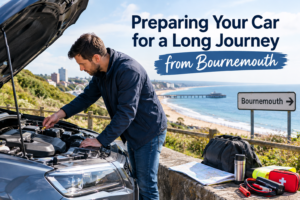
Whether you are heading up the A338 and M27 towards London, west along the A35 to Devon and Cornwall, or catching a ferry from Poole, a long journey puts far more demand on your car than the daily school run or trip to the shops. Engines run hotter for longer, tyres carry heavier loads at higher speeds, and small faults that you barely notice around town can turn into a breakdown on a busy motorway.
The good news is that most roadside breakdowns are preventable. A methodical check before you leave takes a little time and gives you real peace of mind. This guide covers everything worth checking, in the order that makes sense, along with advice on packing, planning your route and what to do when you arrive.
If you would rather have an expert look over the car for you, our mobile mechanic service in Bournemouth can inspect your vehicle on your driveway before you set off.
Why Preparing Your Car Matters
Breakdown organisations see clear seasonal patterns. In winter, battery problems are behind more call outs than anything else. In summer, cooling faults such as failing fans or low coolant become far more common. Either way, the cause is usually something that could have been spotted days earlier.
A long journey also leaves less room for error. Stopping on a hard shoulder, waiting for recovery and rearranging plans is stressful for you and your passengers, and it is a risk in itself. A little preparation lowers that risk considerably.
When Should You Start Preparing?
Do not leave your checks until the morning you travel. Give yourself at least a week, ideally two, so that if something needs attention there is time to order parts and get it fixed without cancelling or rushing your trip.
A sensible timeline looks like this:
- One to two weeks before: Book a professional check or service, and look over the tyres, lights and warning lights.
- Two or three days before: Check fluid levels, tyre pressures, wipers and screenwash.
- The day before: Clean the glass, pack the car, set up your route and charge your phone.
- On the morning: Fuel up or charge, do a final walk around the car and set off rested.
The Essential Checks Before a Long Journey
1. Tyres
Tyres are the only part of your car that touches the road, so they deserve the most attention. Check three things.
Condition. Look closely at the sidewalls and tread for cracks, cuts and bulges. A bulge usually means the internal structure has been weakened, often by a pothole or kerb strike, and the tyre should be inspected before any long drive. Age and sunlight can cause cracking too.
Tread depth. The legal minimum for cars is 1.6mm across the central three quarters of the tyre, around its whole circumference. A simple way to check is with a 20p coin. Slot it into the main grooves and the outer band of the coin should be hidden by the tread. If you can see all of it, get the tyre looked at. Ideally, do not wait until you reach the legal limit before a long trip, because wet roads demand more grip than you might think.
Pressure. Use a reliable gauge when the tyres are cold, ideally before you have driven more than a short distance. The correct figures are in your handbook, on a sticker inside the driver’s door frame or fuel flap, or on the manufacturer’s website. Many cars have different front and rear pressures, and most list a higher setting for a fully loaded car, so check the figure that matches your passengers and luggage. Do not forget the spare wheel if you have one.
Correct pressure also helps your car handle properly and uses fuel more efficiently over a long distance.
2. Engine Oil
Oil keeps the moving parts of your engine lubricated and cool. Park on level ground and check the oil when the engine is cold, or has been off for several minutes. Pull out the dipstick, wipe it clean, put it back fully and pull it out again. The level should sit between the minimum and maximum markers.
If it needs topping up, use the grade and specification listed in your handbook. The wrong oil can cause problems, so if you are unsure, ask a mechanic rather than guessing. A car that burns or leaks oil noticeably should be inspected before it covers hundreds of miles.
3. Coolant
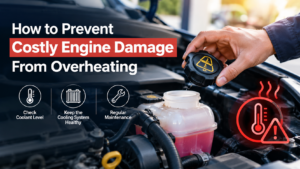
Your cooling system stops the engine overheating, which is one of the most common causes of summer breakdowns. Look at the translucent expansion tank and make sure the level sits between the minimum and maximum lines.
Never open the coolant cap when the engine is hot. The system is under pressure and scalding fluid or steam can cause serious injury. If it needs topping up, wait until the engine has fully cooled and use the coolant type recommended by the manufacturer. If you find yourself topping up regularly, there may be a leak, and that is worth having diagnosed before you go.
4. Brake Fluid and Brakes
Brakes matter on every journey, but even more so when the car is heavily loaded and travelling at speed. Check the brake fluid level against the markings on the reservoir. A noticeably low level can indicate worn pads or a leak.
Then pay attention to how the brakes feel. The pedal should feel firm and consistent, not soft or sinking. The car should stop smoothly in a straight line without pulling to one side. Grinding, squealing, vibration or a longer stopping distance than normal are all signs to book an inspection before you leave. Our brake repair and replacement service can deal with this at your home or workplace.
5. Battery
A weak battery often gives little warning before it fails, usually when you switch the car off at a service station and cannot restart it. Slow starting, dim lights and a flickering dashboard are all warning signs. Batteries wear out over time and with use, so if yours is several years old, have it tested before a long trip. A quick test takes a few minutes and can save you a lot of trouble. We can help with battery testing and replacement wherever your car is parked.
6. Lights
Ask someone to help, or reverse up to a reflective surface such as a garage door or shop window, and check every light. That means dipped headlights, main beam, sidelights, brake lights, indicators, hazard lights, fog lights and reversing lights. Turn on your hazards and walk around the car to confirm each indicator flashes.
Replace any failed bulbs before you leave. It is also sensible to carry a set of spare bulbs, particularly if you are driving abroad, where a working set of bulbs can be a legal requirement.
7. Wipers, Screenwash and Windscreen
Good visibility is vital. Inspect your wiper blades for splits, hardening or smearing, and replace them if they leave streaks. Top up the screenwash with a proper additive, and check the washer jets are clear and aimed correctly. Coastal air and long motorway miles mean bugs, salt and road film build up quickly.
Check the windscreen for chips and cracks, too. Damage in the driver’s line of sight is the most serious. A small chip can spread rapidly on a long drive thanks to vibration and temperature changes, so repair it early. Finally, clean all the glass inside and out, including mirrors and the rear window.
8. Dashboard Warning Lights
When you switch on the ignition, all warning lights should illuminate briefly and then go out once the engine starts. A light that stays on, or one that flashes, is telling you something. Do not ignore it and hope for the best on a long trip.
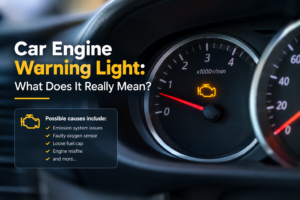
An engine management light in particular can mean anything from a minor sensor fault to something more serious. Our guide to the car engine warning light explains what the different lights mean and when it is safe to keep driving. If a light is on before you leave, get the car properly diagnosed first.
9. Belts, Air Conditioning and Electrics
Have the drive belt checked for cracks, fraying or glazing, as a failed belt can stop the alternator, water pump and power steering all at once. If your car has a cambelt, make sure it has been changed within the manufacturer’s recommended interval. Our article on cambelt and water pump replacement explains why these jobs are usually done together.
Also test the electric windows, heater, air conditioning, demisters, horn and power steering. Being stuck in a hot or fogged up car for hours is uncomfortable and unsafe, so it is better to find a fault in your driveway than on the motorway.
10. Fuel or Charge
It sounds obvious, yet running out of fuel remains a surprisingly common reason for breakdowns. Fill up before you go, and have a rough idea of where you will stop along the way. If you drive a diesel with AdBlue, check the level, because many cars will refuse to restart once it runs out.
For electric vehicles, leave with a full battery and plan your charging stops in advance. Inspect the charging port and cables for dirt, damage or bent pins, as a poor connection can stop a rapid charger from working.
11. Spare Wheel, Jack and Keys
Many modern cars come without a spare wheel and carry a tyre repair kit instead. Find out which your car has. If it has a spare, check its pressure and make sure the jack and wheel brace are present and working. If you have locking wheel nuts, confirm you know where the key is. If you carry a repair kit, check it is in date and that you know how to use it.
Keep a spare key somewhere safe at home, not in the car, in case the main set is lost or locked inside.
Why Book a Mobile Mechanic Before You Travel?
Home checks catch obvious problems, but a trained mechanic sees what you cannot. Worn suspension components, early signs of brake wear, weeping seals, perished hoses and slightly low fluid levels are easy to miss without proper knowledge and equipment.
A mobile mechanic brings the workshop to you. There is no need to arrange a lift, give up a day or leave the car at a garage. We can look over the car at your home or workplace, point out anything that needs attention and carry out repairs on the spot where possible. If you are unsure whether your car needs a professional look, read our guide on when to call a mobile mechanic in Bournemouth.
For a car that has not been serviced recently, a full or interim service before a long trip is one of the best ways to reduce the chance of a breakdown.
Packing the Car Safely
How you load the car affects how it drives, so pack with care.
- Put the heaviest items low down and as close to the centre of the car as you can.
- Keep luggage below the level of the rear seats so it cannot become a projectile in a sudden stop.
- Secure loose items and do not leave anything on the parcel shelf.
- Do not overload the car. Check the maximum weight in your handbook, because extra weight changes steering, braking and stopping distances.
- If you use roof boxes or bike racks, make sure they are properly fixed and take them into account for height and wind noise.
- Raise your tyre pressures if the handbook recommends a higher figure for heavy loads.
What to Keep in the Car for Emergencies
Even a well prepared car can still have a puncture or breakdown, so it is worth being ready.
- A fully charged phone and an in car charger
- A warning triangle (never place it on a motorway) and a high visibility jacket for each passenger
- A torch, spare batteries and a blanket or warm clothing
- A first aid kit
- Water and snacks, especially with children or pets
- Jump leads, or a portable jump starter
- A tyre repair kit or inflator, or a spare wheel in good order
- Your breakdown cover details and a note of your policy number
- Spare bulbs and fuses, plus a basic tool kit
- Printed directions in case you lose signal
Keep a record of your registration number, and know which lane or hard shoulder rules apply if you break down on a smart motorway. In an emergency, your first priority is getting everyone to a safe place away from traffic.
Planning Your Route from Bournemouth
Most long journeys from our area start on the A31, A338 or A35 before joining the M27, M3 or other major routes. These roads can be busy on summer weekends, bank holidays and during school holidays, so a little planning goes a long way.
- Check live traffic and weather before you set off, and allow for delays.
- Plan fuel or charging stops every couple of hours.
- Know your alternative routes in case of closures.
- If you are travelling abroad via the port at Poole or elsewhere, check the legal requirements for the countries you are visiting, including documents, equipment and lighting rules.
- Make sure your breakdown cover applies to your destination.
Looking After Yourself on the Day
A prepared car is only half of the story. Fatigue is a significant risk on long drives.
- Start well rested and avoid driving late at night after a full day.
- Take a break at least every two hours, even if you feel fine.
- Share the driving where possible.
- Stay hydrated and avoid heavy meals before driving.
- Keep your phone out of reach and set up navigation before you start moving.
- Make sure everyone is wearing a seatbelt and that children are in the right seats.
Check the Car Again When You Arrive
Once you get to your destination, take a moment to walk around the car and look for damage, leaks or anything unusual. Let the engine cool completely before checking fluid levels, and give the tyres time to settle before checking their pressure, as hot tyres give inaccurate readings. If you noticed anything odd during the drive, such as a new noise, vibration, pull or smell, arrange for it to be looked at before the return trip.
Quick Long Journey Checklist
- Tyres: condition, tread and pressure, including the spare
- Oil, coolant, brake fluid and screenwash: all at the right level
- Brakes: firm pedal, no pulling, no unusual noises
- Battery: starts easily and has been tested if it is ageing
- Lights: every bulb working
- Wipers and windscreen: clear, no damage
- Warning lights: none illuminated
- Fuel or charge: full, with stops planned
- Emergency kit: packed and accessible
- Documents and breakdown cover: ready
Frequently Asked Questions
How far in advance should I get my car checked before a long journey?
Ideally one to two weeks before. This leaves time to order parts and complete any repairs without disrupting your plans.
What is the most important thing to check before a long drive?
Tyres, brakes and fluid levels are the biggest priorities, because problems with them affect safety most directly. Your battery and cooling system are close behind, as they cause many breakdowns.
Can a mobile mechanic check my car before a long journey?
Yes. A mobile mechanic can inspect your car at your home or workplace, check the key components, and carry out many repairs and services on the spot.
How often should I check my tyre pressure?
Check it at least once a month and always before a long journey, using a gauge when the tyres are cold.
Is it safe to drive with a warning light on?
It depends on the light. Some indicate minor issues, while others, such as oil pressure, brake or temperature warnings, mean you should stop safely and seek help. Always have any illuminated warning light investigated before a long trip.
Should I check my car after the journey too?
Yes. A quick look when you arrive, and a check of fluids and tyres once everything has cooled, helps you catch problems early so they do not spoil the return leg.
Travel with Confidence
A long journey should be about the destination, not the worry of whether your car will make it. By checking your tyres, fluids, brakes, battery, lights and emergency kit in good time, you remove most of the common causes of breakdown.
If you would like a professional to take a look before you go, get in touch with us. We are a mobile mechanic serving Bournemouth and the surrounding area, and we come to you. Contact us today to book a pre journey check and set off knowing your car is ready.