Electrical problems in modern cars almost always trace back to a short list of root causes: a weak battery or failing alternator, corroded or loose connections, damaged wiring, faulty sensors and control modules, moisture getting into the system, and poorly fitted aftermarket accessories. Because today’s vehicles run on dozens of control units that constantly talk to each other, one weak connection can create symptoms that look completely unrelated, from a flickering dashboard to a car that refuses to start on a cold morning.
If you drive around Bournemouth, Poole or Christchurch, the damp winters, salty coastal air and short stop and start journeys put extra strain on a car’s electrical system. This guide explains what really causes electrical faults, how to spot the early warning signs, how a proper diagnosis works and what you can do to prevent trouble. If something already feels wrong, our team can carry out vehicle diagnostics at your home or workplace across Bournemouth and the surrounding Dorset area.
Why Modern Cars Depend So Heavily on Electronics
A car from a few decades ago had a simple electrical system: a battery, a starter, a few lights and a basic ignition circuit. A modern car is closer to a rolling computer network. Engine management, the gearbox, ABS, airbags, lighting, climate control, infotainment and driver assistance features are each handled by their own control module, and many vehicles carry dozens of them while some premium models carry well over a hundred. These modules share information across a data network, usually called a CAN bus, so a fault in one place can show up somewhere else entirely.
This is why electrical faults feel so confusing. Control modules need a steady, correct voltage to work properly, and even a small drop in supply can make them behave oddly or store false fault codes. A tired battery can therefore trigger warning lights that have nothing to do with the battery itself. Add features such as stop start systems, heated seats, parking sensors and large touchscreens, and the demand on the battery and charging system is far higher than it used to be.
The Main Causes of Electrical Problems in Modern Cars
A weak or ageing battery
The battery is the most common starting point. Most car batteries last somewhere between three and five years, and short journeys, cold weather and frequent stop start use shorten that further. A battery that cannot hold a full charge leaves the car’s modules running on low voltage, which leads to slow cranking, random warning lights and a car that struggles to start. Some vehicles also use a battery management system, so a replacement battery may need to be registered with the car for the charging system to work correctly. If your battery is showing its age, our battery replacement service includes testing and mobile fitting.
A failing alternator or charging system
The alternator recharges the battery and powers the car while the engine is running. When it starts to fail, the car slowly drains the battery instead. Typical signs are headlights that dim at idle, a battery warning light, sluggish electric windows and a battery that keeps going flat even after being replaced. A healthy charging system usually delivers somewhere between 13.5 and 14.5 volts with the engine running, which is something a technician can measure in minutes. A worn drive belt can cause the same symptoms, so the whole charging circuit needs testing rather than guessing at one part.
Parasitic battery drain
Sometimes a battery goes flat overnight even though it is fairly new. This is usually a parasitic drain, which means something is still drawing power after the car is switched off. Common culprits include control modules that fail to go to sleep, a stuck relay, a boot or glovebox light that stays on, and badly fitted accessories. Finding the source means measuring the current draw and removing fuses one at a time, which is a job that needs patience and the right equipment.
Corroded or loose connections and poor earths
Every electrical circuit needs a clean path back to the battery, and that path relies on earth connections and plugs staying tight and corrosion free. Corrosion adds resistance, so power struggles to flow even though the part itself is perfectly healthy. This is one of the most common causes of intermittent faults, because a marginal connection can work in the warm afternoon and fail on a cold, damp morning. Dimming lights, slow windows, erratic gauges and unexplained warning lights are all classic signs. Damp coastal air makes this more likely in our area.
Damaged wiring, fuses and relays
Wiring can be chafed by vibration, pinched during previous repairs, flexed over time where harnesses pass through door hinges and the boot lid, or even chewed by rodents. A blown fuse once in a while can be a one off, but a fuse that keeps blowing is a sign of a short circuit somewhere in that circuit. Fitting a higher rated fuse is never the answer, because the fuse exists to protect the wiring from overheating. Relays, which act as electrically controlled switches, can also wear out and cause clicking noises or components that work only some of the time.
Faulty sensors and control modules
Modern cars rely on sensors to report everything from wheel speed to oxygen levels in the exhaust. When a sensor fails or its wiring is damaged, it sends wrong or no data, and the related system may reduce performance or switch on a warning light. Control modules themselves are less likely to fail, but when they do it is often because of water damage, a voltage spike or a poorly done jump start. This is why a proper scan and testing process matters before any part is replaced. Our exhaust and emission repairs team regularly sees sensor related faults that began as wiring or connector problems.
Water ingress and humidity
Moisture is a quiet enemy of car electronics. Worn door seals, blocked sunroof or scuttle drains, leaking windscreen seals and heavy pressure washing around the engine bay can all let water reach connectors and modules. The damage may not appear straight away, so a fault that started a few weeks after heavy rain or a flooded road is a strong clue.
Aftermarket accessories and previous repairs
Dash cameras, alarms, tow bars, upgraded audio systems and trackers all need power, and if they are wired in badly they can cause drain, blown fuses or interference with other modules. If your electrical trouble began soon after something was fitted, the installation is the first place to look.
Software and coding issues
Last but not least, not every electrical fault is a physical fault. Control modules run software, and sometimes a module needs an update, a reset or recoding after a repair or battery change. A diagnostic scan can reveal these software related faults, which is one reason a visual inspection alone is rarely enough on a modern car.
Warning Signs of an Electrical Problem
Starting and charging clues
Slow or laboured cranking, a clicking sound when you turn the key, or a car that starts fine one day and not the next all point towards the battery, starter circuit or charging system. A battery warning light that stays on while driving means the charging system is not doing its job and the car is running on stored battery power, so it should be looked at promptly.
Lights and dashboard behaviour
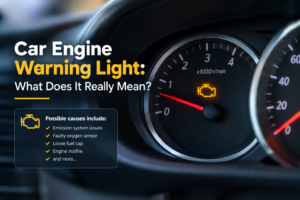
Headlights that dim at idle and brighten when you rev the engine, interior lights that flicker, or several dashboard warning lights appearing at once are typical signs of low or unstable voltage. A single persistent engine, ABS or airbag warning light also deserves attention, because each one is linked to a stored fault code that a scan tool can read. Our guide on what an engine warning light really means goes deeper into this topic.
Comfort and convenience features
Electric windows that move slowly, central locking that works only sometimes, a radio or touchscreen that restarts by itself, or air conditioning that stops working for no clear reason can all come from electrical faults. The air conditioning compressor, for example, depends on a working relay and clean connections, so an electrical issue can look like a refrigerant problem. If you are unsure which it is, our air conditioning service and re-gas team can help find out.
Smells and sounds
A burning smell, especially one that resembles hot plastic, should never be ignored. It can mean a wire is overheating or a short circuit is developing. Buzzing, humming or repeated clicking from under the dashboard or bonnet also suggests a relay or wiring problem. If you notice a burning smell or any smoke, stop driving as soon as it is safe and call for help.
Why the problem comes and goes
Intermittent faults are the most frustrating of all. Loose or corroded connections make and lose contact as the car heats up, cools down or vibrates over bumps, so a problem can disappear by the time you reach a garage. Telling your mechanic exactly when it happens, such as on cold starts, in the rain or over rough roads, gives them a useful head start.
How Electrical Faults Are Properly Diagnosed
Replacing parts by guesswork is the most common mistake with electrical faults. A new alternator will not help if the real problem is a corroded earth strap, and a new battery will not cure a parasitic drain. A professional diagnosis follows a logical order so the true cause is found first.
- Scan the car for stored fault codes across all control modules, not only the engine unit.
- Test the battery condition and the charging output of the alternator.
- Check for parasitic drain by measuring current draw once the car has gone to sleep.
- Inspect fuses, relays, earth points and connectors for corrosion, heat damage or looseness.
- Use wiring diagrams and live data to trace the fault through the affected circuit.
- Repair the cause, clear the codes and test drive the car to confirm the fix.
You may come across advice online suggesting that disconnecting the battery for a few minutes will reset warning lights. This can clear a warning temporarily, but it does not fix the fault, and on many modern cars it also wipes learned settings or stored codes that a technician needs to see. It is better to leave the codes in place and have them read properly. Our vehicle diagnostics service provides full system scans, clear fault codes and a plain English explanation of what was found.
How to Prevent Electrical Problems
Most electrical faults give some warning before they become a breakdown, so the best prevention is paying attention early. Have the battery tested before winter, and again if the car is over three years old, because a battery can test as healthy in summer and fail on the first frosty morning. If most of your driving is short journeys, take the car for a longer drive every week or two so the alternator has time to fully recharge the battery.
Keep an eye on the battery terminals and look for white or green crusty deposits, which signal corrosion. Do not leave accessories such as dash cameras, chargers or interior lights running when the car is parked for long periods, and have any new accessory fitted properly with the right fuse rather than spliced into existing wires. Keep drains and door seals clear so water cannot reach the electronics, and be careful when pressure washing around the engine bay.
If the car ever needs a jump start, follow the manufacturer’s instructions carefully, because a wrongly connected lead can damage sensitive modules. Finally, do not ignore dashboard warning lights, and make sure electrical checks are part of your regular maintenance. A full or interim car service is a good opportunity to have the battery, charging system and visible wiring looked over.
When to Call a Mobile Mechanic
Some electrical symptoms can wait for a convenient appointment, such as a slow window or a radio that occasionally restarts. Others need attention straight away. If you smell burning, see smoke, notice several warning lights together with dimming headlights, or the battery light comes on while driving, pull over safely and get help instead of carrying on. The same applies if the car will not start and you are not sure why.
This is where a mobile mechanic makes life easier. Instead of arranging a tow or finding a lift to a garage, a qualified technician can come to your home or workplace, scan the car, test the battery and charging system and track down the fault on the spot. At Mechanic Bournemouth we cover Bournemouth, Poole, Christchurch and the wider Dorset area, Monday to Saturday from 8am to 8pm. You can browse our full list of services, read more about us, or contact us to book a visit.
Frequently Asked Questions
Can a bad battery cause other electrical problems in my car?
Yes. Control modules need a stable voltage, so a weak battery can cause random warning lights, slow cranking, glitching infotainment and even gearbox or engine behaviour that seems unrelated. Testing the battery is usually the first step.
Why does my car’s electrical fault come and go?
Intermittent faults are most often caused by loose or corroded connections that make and break contact as the temperature changes or the car vibrates. Noting when the problem happens helps a technician reproduce it.
Is it safe to keep driving with the battery warning light on?
It is best not to. The light means the charging system is not working properly, so the car is running on stored battery power and may stop without much notice. Head somewhere safe and have it checked as soon as you can.
Can I fix car electrical problems myself?
Simple checks such as looking at battery terminals, locating the fuse box and noting when symptoms occur are sensible. Anything beyond that, including wiring repairs, module faults and warning light diagnosis, is better left to a professional, since mistakes can damage sensitive electronics or create a fire risk.
Can jump starting damage a modern car?
It can if done incorrectly. Reversed leads or voltage spikes can harm sensitive control modules. Always follow the instructions in the car’s handbook, or call for help if you are unsure.
Final Thoughts
Electrical problems in modern cars rarely come from one dramatic failure. More often they build up from a tired battery, a poor connection, a bit of moisture or a worn wire, and then show themselves in confusing ways. Paying attention to early warning signs, keeping the battery and charging system healthy and choosing a proper diagnosis over guesswork will save you time, stress and repeat visits.
If your car is showing any of the signs described above, book a diagnostic visit with Mechanic Bournemouth and we will come to you, find the real cause and explain it clearly. You can also read more helpful guides on our blog or check our FAQs for quick answers.