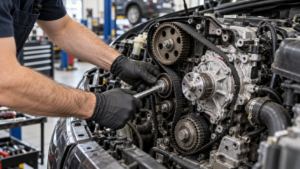
Ask most drivers what keeps their engine alive, and they’ll mention fuel, maybe the battery, perhaps the timing belt. Very few will say engine oil and yet it’s the single most important fluid in your car. An oil change is also one of the cheapest, quickest jobs a garage will ever do for you. The irony is hard to miss: the most affordable service on the menu is the one protecting the most expensive component you own.
At Mechanic Bournemouth, we’ve spent over 15 years looking after cars across Bournemouth, Poole, Christchurch, and the wider Dorset area. In that time we’ve seen far too many engines ruined by something completely avoidable, skipped oil changes. This guide explains exactly what your oil does, what happens when you neglect it, how often you really need to change it, and how to spot the warning signs before they turn into a four-figure repair bill.
What Engine Oil Actually Does
Engine oil is far more than a lubricant. Inside your engine, hundreds of metal components move against one another thousands of times a minute, generating enormous heat and friction. Oil does several jobs at once to keep all of this under control:
- Lubrication. It creates a thin protective film between moving parts, pistons, camshafts, crankshaft bearings so metal never grinds directly against metal. Without it, friction would generate so much heat that the surfaces would effectively weld themselves together, leaving you with a seized engine.
- Cooling. Oil draws heat away from the combustion chamber, where thousands of tiny controlled explosions happen every minute, helping to regulate engine temperature alongside your coolant.
- Cleaning. Fresh oil carries away the carbon, varnish, and microscopic debris that naturally build up inside an engine, holding it in suspension until the filter traps it.
- Corrosion protection. Modern oils contain additives that neutralise acids and shield internal components from rust and corrosion.
Here’s the catch: oil cannot do any of these jobs forever. With every mile and every cold start, it degrades. It thins out, loses its additives, and becomes saturated with contaminants. Old, dirty oil doesn’t just stop protecting your engine — it actively works against it.
What Happens If You Don’t Change Your Oil
This is where neglect gets expensive. Over time, oil becomes dirty and thick. Your oil filter removes contaminants for a while, but eventually it clogs. When that happens, the dirty oil bypasses the filter through a relief valve, because the engine is designed to keep dirty oil circulating rather than no oil at all.
As the oil gets dirtier and thicker, it slowly stops lubricating altogether. The build-up that follows is sometimes called the “black death” in the trade: a thick, tar-like sludge that coats the inside of the engine. Pistons can seize, camshafts and bearings wear out, and in the worst cases the engine fails completely. The repair bill for damage like this, often a full engine rebuild or replacement makes a routine oil change look like loose change.
It’s a useful way to think about it: a regular oil and filter change is some of the cheapest insurance you can buy for your engine. Spend a little now, or risk spending thousands later.
The Real Benefits of Regular Oil Changes
Beyond simply avoiding catastrophe, staying on top of your oil delivers genuine, measurable benefits every single day you drive.
1. Better engine performance. Fresh, clean oil flows freely and keeps everything properly lubricated, so your engine runs smoother and responds more crisply. Old oil that’s thickened with contaminants makes the engine work harder for the same result.
2. Improved fuel efficiency. Friction is the enemy of the economy. Clean oil reduces internal resistance, which means your engine burns less fuel to do the same work. Over a year of driving, the savings at the pump add up especially with today’s fuel prices.
3. A longer engine life. Regular changes flush away the abrasive particles and sludge that grind down components like the camshaft, crankshaft, and pistons over time. Keep the oil clean and those parts last dramatically longer, which protects the long-term value of your car.
4. Lower emissions. Dirty oil increases the hydrocarbon build-up that pushes up your exhaust emissions. Fresh oil helps keep emissions within the manufacturer’s intended levels, which matters both for the environment and for sailing through your MOT emissions test.
5. Fewer costly repairs. Neglected oil leads to increased oil and fuel consumption, accelerated wear, and eventually major component failure. A consistent oil change schedule prevents these expensive problems before they start.
6. A health check for your whole car. Every oil change is an opportunity for a trained technician to take a quick look under the bonnet. We routinely spot leaks, low fluids, worn belts, or other small issues during a service, catching them early, while they’re cheap to fix. It’s a benefit you simply don’t get from neglecting the job or doing it yourself in a hurry.
How Often Should You Change Your Oil?
This is the question we’re asked most often, and the honest answer is: it depends on your car and how you drive it. The old “every 3,000 miles” rule is now largely outdated thanks to advances in engine and oil technology.
As a general guide, the RAC and most manufacturers recommend changing your engine oil typically every 5,000 to 7,500 miles, depending on the type of oil and driving conditions. Cars running fully synthetic oil can often go further up to 10,000 –15,000 miles depending on the car and oil type.
A few important points to keep in mind:
- Always check your owner’s manual first. It contains the exact interval and oil grade your specific vehicle needs. Using the wrong grade of oil can actually cause damage.
- Time matters as much as mileage. Even if you barely drive, oil degrades on its own. It’s important to change your oil at least once or twice a year, because oil naturally degrades over time.
- Tough driving means more frequent changes. Frequent short trips, towing, or driving in extreme temperatures can require more frequent oil changes. Stop-start town driving around Bournemouth is harder on your oil than steady motorway miles.
If you’re ever unsure, our team is happy to advise on the right interval for your exact make and model, just give us a call.
Synthetic vs Conventional Oil: Does It Matter?
Yes, and knowing the difference helps you understand your change interval. Conventional (mineral) oil is cheaper but breaks down faster, typically needing replacement every 3,000 to 5,000 miles. Fully synthetic oil is engineered to resist breakdown, performs better in extreme hot and cold temperatures, and protects more effectively, which is why it can last considerably longer between changes.
Synthetic costs are more up front, but the longer intervals and superior protection often make it the more economical choice over the life of the engine. The key is to use whatever your manufacturer specifies. When we carry out an oil change, we always use the correct grade of oil for your vehicle so your engine gets exactly the protection it was designed for.
Don’t Forget the Oil Filter
Changing the oil without changing the filter is a false economy. The filter is what traps the harmful debris and contaminants your oil collects. A clogged, old filter can’t do its job, meaning your fresh oil gets dirty far quicker and your engine loses protection sooner.
That’s why a proper oil change always includes a new filter. At Mechanic Bournemouth, a new filter is included as standard with every oil change, so you get the full benefit of clean oil from the moment you drive away.
Warning Signs Your Car Needs an Oil Change
You don’t always have to wait for the dashboard light. Watch and listen for these common signs that your oil needs attention:
- Dark, gritty oil. Fresh oil is a translucent amber or golden colour. Older oil appears dark brown or black and may be gritty or thick on the dipstick. (Note that some newer cars no longer have a dipstick and monitor oil condition electronically instead.)
- The oil or check-engine warning light. Never ignore it, it’s the clearest signal your car can give you.
- Engine noise. Knocking, ticking, or a generally louder, rougher-running engine can mean the oil is no longer lubricating properly.
- Reduced performance or worse fuel economy. If the car feels sluggish or you’re filling up more often, degraded oil could be the cause.
- A burning oil smell or visible smoke from the exhaust.
If you’ve noticed any of these, don’t wait. Booking an oil and filter change promptly is the cheapest way to avoid a much bigger problem.
Where an Oil Change Fits Into Wider Car Care
An oil change is the foundation of good vehicle maintenance, but it works best as part of a routine. A full or interim car service includes an oil change alongside a thorough multi-point inspection, following your manufacturer’s schedule to protect your warranty. And if a warning light is already on, our vehicle diagnostics service can pinpoint exactly what’s going on before it escalates. Together, these services keep your car safe, efficient, and reliable for years to come.
Frequently Asked Questions
How long does an oil change take?
For most vehicles it’s a quick job, often completed while you wait. We use the correct grade oil for your car and include a new filter as standard.
Can I just top up the oil instead of changing it?
Topping up replaces lost volume but does nothing about the contaminants and degraded additives in the oil that’s already there. Topping up is fine between services, but it’s no substitute for a proper oil and filter change.
What happens if I go too long between oil changes?
The oil thickens with sludge, stops lubricating effectively, and can cause serious internal wear or complete engine failure, the “black death” mentioned earlier. The repair costs vastly outweigh the price of regular changes.
Is synthetic oil worth the extra cost?
For most modern engines, yes. It lasts longer, protects better, and handles temperature extremes well. Always use the grade your manufacturer recommends, we’re happy to advise.
How do I know which oil my car needs?
Your owner’s manual specifies the exact grade. If you’re not sure, bring your car to us and we’ll make sure it gets exactly the right oil.
Book Your Oil Change in Bournemouth Today
Regular oil changes really do matter more than most drivers think. They protect your engine, save you money on fuel and repairs, reduce emissions, and extend the life of your car all for a fraction of the cost of the damage neglect can cause.
Whether you’re noticing the warning signs or simply want to keep your vehicle in peak condition, the team at Mechanic Bournemouth is here to help. We use the correct grade oil for your vehicle, include a new filter every time, and complete the job quickly and honestly serving drivers across Bournemouth, Poole, Christchurch, and Dorset, with a convenient mobile service available too.
Get in touch today or call us on +44 7739 393911 to book your oil change and give your engine the protection it deserves.