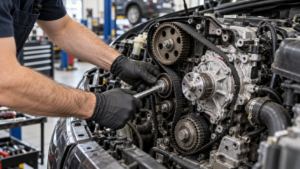
Modern cars are smarter, cleaner, and more efficient than ever before. Service intervals have stretched from 3,000 miles to 10,000 miles or more, synthetic oils last longer, and your dashboard will even tell you when something’s wrong. So it’s easy to assume that the humble oil change has become an old-fashioned ritual something only older cars really need.
It hasn’t. If anything, regular oil changes are more important for modern engines than they ever were for the cars our parents drove. Tighter tolerances, turbochargers, stop-start systems, and direct-injection technology all put fresh oil under more stress than ever — and a missed oil change can turn a £75 service into a £4,000 engine rebuild.
At Mechanic Bournemouth, we’ve spent over 15 years looking after engines across Bournemouth, Poole, and Christchurch and we’ve seen exactly what happens when drivers trust the dashboard a little too much. Here’s the honest, no-nonsense truth about why your modern car still needs regular oil changes.
What Engine Oil Actually Does (And Why It Matters Even More Today)
Engine oil isn’t just a lubricant. In a modern petrol or diesel engine, it’s working harder than most drivers realise. Inside your engine, hundreds of metal components, pistons, camshafts, crankshafts, bearings, timing chains are moving at thousands of revolutions per minute, often within fractions of a millimetre of each other. Oil is the only thing keeping them from grinding themselves to dust.
But lubrication is only one of its jobs. Engine oil also:
- Cools the engine by drawing heat away from the combustion chamber, where thousands of controlled explosions happen every minute.
- Cleans internal components by suspending soot, carbon, and metal particles and carrying them to the oil filter.
- Prevents corrosion by neutralising acidic by-products of combustion.
- Seals the gap between pistons and cylinder walls, helping the engine maintain compression and power.
In older engines, oil mostly just had to lubricate. In modern engines, with their turbochargers spinning at 200,000+ rpm, gasoline direct injection (GDI) systems, and stop-start technology that fires the engine up dozens of times per journey, the oil has to do all of the above, often at much higher temperatures and pressures. That’s a brutal working environment, and it’s why fresh, clean oil matters more, not less.
Why “Modern Cars Don’t Need Oil Changes” Is a Dangerous Myth
The myth comes from a kernel of truth: today’s cars can go longer between oil changes than older ones. But “longer” is not “never,” and there are several modern engineering realities that actually make oil changes more critical:
1. Longer Service Intervals Mean More Stress on the Oil
When a manufacturer says you can go 15,000 or even 20,000 miles between services, what they’re really saying is: we’re confident the oil will hold up that long under average conditions. Average. If you do mostly short trips around Bournemouth, sit in traffic on the Wessex Way, or use your car for the school run, you’re nowhere near “average.” Your oil is degrading faster than the interval assumes.
2. Turbochargers Are Brutal on Oil
Most new petrol cars are turbocharged, even small ones. Turbos run red-hot and rely entirely on engine oil for both lubrication and cooling. Old, sludgy oil can cause turbocharger failure and a replacement turbo on a typical family car runs £1,200 to £2,500 fitted.
3. Stop-Start Systems Multiply Engine Wear
Stop-start technology saves fuel, but every restart is a moment of metal-on-metal contact before oil pressure builds back up. Clean, fresh oil clings to components better and re-circulates faster, protecting the engine during these vulnerable seconds.
4. GDI Engines Are Prone to Carbon Build-Up
Gasoline direct injection has revolutionised efficiency, but it also produces more carbon and soot in the oil. That makes a quality oil filter and a timely change essential not optional.
5. Oil-Life Monitors Aren’t Crystal Balls
The “oil life” percentage on your dashboard is an algorithm, not a measurement. It estimates oil condition based on mileage, engine temperature, and driving style but it doesn’t actually test the oil. If you’ve ever ignored an oil change reminder because “the car feels fine,” you’re trusting maths over chemistry.
The Top Benefits of Regular Oil Changes for Modern Cars
So what do you actually get for the price of a routine oil and filter change? More than you might think.
Longer Engine Life
This is the headline benefit. Engines that receive regular oil changes routinely last 200,000+ miles. Engines that don’t can fail before 80,000 — and the repair bill often exceeds the value of the car. Think of an oil change as the cheapest insurance policy you’ll ever buy.
Better Fuel Economy
Fresh oil reduces internal friction, which means your engine uses less energy to turn over. That translates directly into better miles per gallon. The savings on a single tank may be small, but across a year of driving, regular oil changes pay for themselves at the pump.
Lower Emissions (and an Easier MOT)
Old, contaminated oil increases the hydrocarbons your engine produces, which is exactly what the MOT emissions test measures. A neglected oil change is one of the most common reasons modern cars unexpectedly fail their MOT on emissions.
Protection Against Costly Repairs
Dirty oil leads to sludge build-up, which clogs oil passages, starves bearings, damages turbochargers, and eventually causes catastrophic failure. Mechanics have a nickname for the result: the “Black Death.” A seized engine, ruined by years of neglected oil changes, is one of the most heartbreaking things we see in the workshop — and one of the most preventable.
Preserved Warranty and Resale Value
If your car is still under manufacturer warranty, skipping scheduled oil changes can void it entirely. And when you come to sell, a complete service history with regular oil and filter changes can add hundreds — sometimes thousands — to your asking price.
Smoother, Quieter Performance
You may not notice the difference straight after an oil change, but you’ll feel it weeks later when the engine sounds notably louder or rougher. Clean oil simply makes engines run more smoothly. It’s one of those small upgrades you only appreciate by comparison.
How Often Should You Change the Oil in a Modern Car?
There’s no universal answer it depends on your specific vehicle, your driving style, and the type of oil you use. As a general guide for UK drivers:
- Conventional oil: every 5,000–7,500 miles, or every 6–12 months.
- Synthetic blend oil: every 7,500–10,000 miles, or every 12 months.
- Full synthetic oil: every 10,000–15,000 miles, or every 12 months.
That said, you should change your oil more frequently if any of the following apply to you:
- You mostly drive short trips (under 10 miles).
- You drive in heavy stop-start traffic.
- You tow a caravan or trailer.
- Your car has a turbocharger or is over 75,000 miles.
- You drive in dusty or coastal conditions (something to consider along the Dorset coast).
The golden rule? Whichever comes first: the mileage interval or 12 months. Even cars that barely move accumulate moisture and acidic by-products in their oil, which is why time-based oil changes matter as much as mileage-based ones.
Signs Your Modern Car Needs an Oil Change Sooner
Don’t wait for the warning light. Modern cars are good at hiding problems, but they always leave clues. Watch out for:
- Dark, gritty oil on the dipstick fresh oil looks like honey or maple syrup; old oil looks like black tar.
- Knocking, ticking, or louder-than-usual engine noise, especially at start-up.
- A burnt or oily smell inside or outside the cabin.
- The oil change or check engine light illuminating on the dashboard.
- Reduced fuel economy without any change in driving habits.
- Visible blue or grey smoke from the exhaust.
If you spot any of these symptoms, don’t put it off. Our team can run a full vehicle diagnostic to confirm whether the issue is oil-related or something more serious.
Synthetic vs Conventional Oil: Which Does Your Car Actually Need?
Most modern engines especially those with turbochargers, stop-start, or direct injection — are designed to run on full synthetic oil. Synthetic oils have a more uniform molecular structure, perform better at extreme temperatures, resist breakdown for longer, and offer superior protection during cold starts.
Conventional (mineral) oil is cheaper, but it’s only really suitable for older engines without modern technologies. Using the wrong grade or worse, mixing grades can cause premature wear and may even invalidate your warranty.
The safest approach: check your owner’s handbook for the manufacturer’s specified oil grade (something like 5W-30 or 0W-20), and stick to it. If you’re not sure, our Bournemouth mechanics will identify the correct oil for your exact make and model no guesswork.
Why an Oil Change Is the Best £75 You’ll Spend All Year
Compared to the cost of major engine repairs, an oil and filter change is genuinely one of the most cost-effective things you can do for your car. To put it in perspective:
| Job | Typical Cost |
| Routine oil and filter change | £55–£95 |
| New turbocharger | £1,200–£2,500 |
| Engine rebuild (top-end) | £2,000–£4,000 |
| Full engine replacement | £3,500–£8,000+ |
That’s not scaremongering those are real bills we quote on, regularly, for cars that simply didn’t get the oil changed when they should have. Skipping a £75 oil change to avoid the cost almost always costs you more in the long run.
For a complete look at all the components we check during a service, see our guide to full and interim servicing oil and filter changes are included as standard in both.
Book Your Oil and Filter Change in Bournemouth
Whether your dashboard is asking for it, your service is due, or you just want peace of mind before a long drive, a fresh oil and filter change is the single best thing you can do for your engine. At Mechanic Bournemouth, we use only the correct manufacturer-specified oil grade for your vehicle, fit a quality new filter, and dispose of the old oil responsibly usually while you wait.
We serve drivers across Bournemouth, Poole, Christchurch, and the wider Dorset area, and we also offer a mobile mechanic service for customers who can’t get to the workshop.
Call us today on +44 7739 393911 or book online to get your oil change sorted and keep your modern car running like the engineering marvel it was designed to be.
Frequently Asked Questions
Do electric cars need oil changes?
No, fully electric vehicles don’t have a combustion engine, so they don’t need engine oil changes. However, hybrid cars still have a petrol or diesel engine and absolutely need regular oil changes, often more frequently because the engine starts and stops constantly.
Can I change the oil myself?
You can, but for most modern cars we’d recommend against it. Many vehicles require specific oil grades, electronic service resets, and proper disposal of used oil. A professional oil change costs little more than buying the oil and filter yourself, and it comes with a workshop’s safety check thrown in.
What happens if I go over my oil change interval by a few thousand miles?
A small overrun (under 1,000 miles) is usually not catastrophic, but every mile beyond the recommended interval increases wear. Don’t make a habit of it — and if you’ve gone significantly over, book in straight away.
Does the oil filter need changing every time?
Yes. The oil filter traps the dirt and debris that fresh oil is supposed to flush out. Reusing an old filter with new oil contaminates the oil almost immediately. A proper oil and filter change always includes both.
How long does an oil change take?
At Mechanic Bournemouth, most oil and filter changes are completed within 30–45 minutes. Many of our customers wait in our reception area with a coffee while we get the job done.