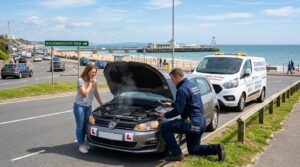
There’s a particular kind of dread that comes with turning your key and hearing nothing but a hollow click. Maybe you’re on the school run, maybe you’re already late for work, or maybe you’ve just loaded the boot with the weekly shop. Either way, your car isn’t going anywhere and you’re now hunting for jump leads or dialling for recovery.
If this sounds familiar, you’re far from alone. A flat or failing battery is the single biggest cause of car breakdowns in the UK, and it’s a problem that strikes thousands of drivers every single day. According to RAC data, battery issues have long topped the list of breakdown call-outs, with patrols attending hundreds of thousands of them every year. On the first working Monday of 2025 alone, nearly a quarter of all RAC breakdowns were down to flat batteries.
The good news? Most battery problems give you warning signs long before they leave you stranded and almost all of them are preventable with a little knowledge and timely attention. In this guide, our team at Mechanic Bournemouth breaks down the most common car battery problems UK drivers face, how to spot them early, what causes them, and exactly how to fix each one.
Why Your Car Battery Matters More Than You Think
Your battery is the heart of your car’s electrical system. It powers the starter motor that gets your engine going, and it supports everything from your headlights and infotainment system to your central locking, dashboard electronics, and safety systems. On modern vehicles with stop-start technology, this workload is heavier than ever.
Despite doing all this heavy lifting, the battery is one of the most overlooked components of the car, usually ignored entirely until the day it refuses to cooperate. Understanding how it can fail is the first step to never being caught out.
Quick Warning Signs Your Battery Is Struggling
Before we get into specific problems, here are the early warning signs that your battery may be on its way out. If you notice any of these, it’s worth getting checked sooner rather than later:
- The engine cranks slowly or hesitates when you start it
- The battery or charging-system warning light appears on your dashboard
- Headlights dim noticeably, especially when idling or at low revs
- Electrical gremlins flickering lights, glitchy radio, slow power windows or central locking
- You’ve needed a jump-start recently
- A clicking sound but no engine turnover when you turn the key
Catching these signs early can be the difference between a quick, planned battery check and an unexpected roadside breakdown. Our vehicle diagnostics service in Bournemouth can pinpoint exactly what’s going on in minutes.
1. Battery Not Holding Charge (Dead or Failing Battery)
This is the classic and most common battery problem. You park up fine in the evening, and the next morning the car simply won’t start.
Why it happens: Batteries naturally lose their ability to hold charge as they age. Most car batteries last between three and five years, and after that they become increasingly unreliable. Frequent short journeys make things worse, because the battery never gets enough running time to fully recharge. A parasitic drain (more on that below) or a charging fault can also be the culprit.
Signs to watch for: Slow cranking, repeated failures to start (particularly after the car has sat overnight), and needing more than one attempt to fire the engine.
How to fix it: If your battery is more than three to five years old and frequently goes flat, it has likely reached the end of its life and needs replacing. Before fitting a new one, though, it’s worth having a mechanic confirm there isn’t an underlying drain or charging issue causing the problem otherwise you’ll be back to square one with a brand-new battery. Repeatedly jump-starting a failing battery is a short-term fix that can actually stress your vehicle’s electronics over time. A proper battery replacement restores reliability starting straight away.
2. Corroded Battery Terminals
Lift your bonnet and spot a crusty white, blue, or greenish powder around the battery posts? That’s corrosion, and it’s a surprisingly common cause of starting trouble.
Why it happens: Tiny amounts of acid vapour escape from the battery and react with the metal terminals, forming that powdery build-up. Over time it interrupts the flow of electricity between the battery and the rest of the car.
Signs to watch for: Visible white or bluish deposits on the terminals, difficulty starting, dim lights, and erratic electrical behaviour.
How to fix it: Light corrosion can sometimes be cleaned off and the terminals protected with a dedicated terminal grease or spray to prevent it returning. However, if corrosion keeps coming back or starting problems persist after cleaning, it can point to a leaking battery or a deeper charging fault which is best assessed professionally before it damages other components.
3. Loose or Damaged Battery Cables and Connectors
Even a perfectly healthy battery is useless if it can’t deliver power through its cables. Poor connections are a frequently missed cause of starting problems.
Why it happens: Constant engine vibration, general wear and tear, or a poor previous installation can loosen connections or fray the cables over time.
Signs to watch for: Intermittent starting issues, flickering lights, or seemingly random electrical faults that come and go. The connections may move easily if you (carefully) wiggle them, or the cables may look frayed or corroded.
How to fix it: Sometimes simply tightening a loose terminal solves the issue entirely. But if the cables are damaged, corroded, or the problems continue after tightening, they should be replaced by a professional to ensure a safe, reliable connection. It’s a small job that can save you an unnecessary battery replacement.
4. Faulty Alternator (Charging System Problems)
Here’s a problem people often blame on the battery when the real fault lies elsewhere. Your alternator recharges the battery while you drive so if it fails, no battery will stay charged for long.
Why it happens: The alternator can wear out, or its drive belt can slip, leaving the battery undercharged. A faulty voltage regulator can also cause overcharging, which damages the battery the other way.
Signs to watch for: A battery warning light, dimming headlights (especially as you accelerate or use more electrics), repeated battery failures even after a replacement, and a battery that drains while driving.
How to fix it: Because several different faults can mimic alternator failure, it’s important to confirm the diagnosis before replacing anything. A proper diagnostic test measures your alternator’s output and checks the whole charging system, so you don’t end up paying for a part you didn’t need. If the alternator is genuinely at fault, replacing it solves the repeated breakdowns for good. This is exactly the kind of fault our diagnostic specialists trace every week.
5. Parasitic Battery Drain
If your battery is fine one day and flat the next with no obvious reason a parasitic drain is a likely suspect.
Why it happens: Something in the car keeps drawing power after the engine is switched off. Common culprits include a glovebox or boot light that never turns off, an aftermarket dashcam or phone charger, an alarm system, a faulty relay, or a misbehaving electronic module.
Signs to watch for: The battery drains overnight or over a few days of the car sitting idle, requiring frequent jump-starts despite the battery itself being healthy.
How to fix it: Parasitic drains are notoriously tricky to track down without the right equipment. A mechanic will use a multimeter and systematic fuse testing to identify exactly which circuit is pulling power when the car is off. Once the offending component is found, it can be repaired or isolated. If your battery keeps going flat for no clear reason, a professional diagnostic is the fastest route to an answer.
6. Overcharging, Undercharging and Swollen Battery Cases
Your battery needs to receive exactly the right voltage. Too much or too little, and its lifespan plummets sometimes dangerously.
Why it happens: Overcharging is usually caused by a faulty alternator or voltage regulator pushing too much voltage into the battery. Undercharging happens when the alternator can’t supply enough power to top the battery up fully. Overcharging and extreme heat can cause the battery case to swell or bulge.
Signs to watch for: A swollen or distorted battery case, leaking battery fluid, a smell of rotten eggs, overheating, or a weak battery that struggles to start the car despite being relatively new.
How to fix it: A swollen or bulging battery should never be ignored it’s a genuine safety hazard. Do not attempt to jump-start, charge, or drive with one, as it can leak acid or, in rare cases, rupture. The safe course of action is to have it removed, replaced, and disposed of professionally, and to have the charging system checked so the same thing doesn’t happen to the new battery. Our battery replacement service includes safe disposal of your old unit.
7. Extreme Weather Effects
British weather puts batteries through their paces all year round, and temperature extremes at both ends of the scale take their toll.
Why it happens: Cold weather slows the chemical reactions inside the battery, reducing the power available to crank the engine, which is precisely why breakdowns spike in winter and on the first cold mornings after the car has sat unused over the holidays. Hot weather, on the other hand, speeds up those reactions and can cause battery fluid to evaporate, leading to internal damage.
Signs to watch for: Sluggish starts on cold winter mornings, and faster-than-expected battery failure during prolonged hot or cold spells.
How to fix it: There’s no way to control the weather, but you can prepare for it. Have your battery tested before winter sets in especially if it’s more than four years old and replace it proactively if it’s weak. Taking the car for a proper drive every week or two, rather than just short hops, helps keep the charge topped up through the cold months.
8. Using the Wrong Battery Type
Modern cars are fussy about their batteries, and fitting the wrong one often after a rushed DIY replacement causes more problems than it solves.
Why it happens: Cars with stop-start technology need specific battery types (EFB or AGM), and many newer vehicles require the new battery to be electronically “registered” or coded to the car’s computer. Fitting a cheaper, incompatible, or unregistered battery leads to poor charging and early failure.
Signs to watch for: Electrical system glitches, a battery that fails far sooner than it should, and repeated charging warnings after a recent replacement.
How to fix it: The battery needs to match your vehicle’s exact specification size, type, and rating and, on many modern cars, be properly registered to the ECU. If you’re unsure, it’s far cheaper in the long run to have the right battery supplied and fitted correctly the first time. (More on choosing the right battery below.)
Which Cars Are Most Prone to Battery Problems?
While any car can suffer battery trouble, certain popular UK models are known for more frequent 12-volt complaints, often due to the demands of stop-start systems and complex electronics:
| Make / Model | Common battery complaint |
| BMW 3 & 5 Series, X-range (AGM cars) | “Battery discharge” warnings and overnight drain, often blamed on the battery sensor or comfort-access modules |
| Audi A3/A4/Q-series & VW Golf/Tiguan (stop-start) | EFB/AGM batteries lose charge quickly on short trips; infotainment units a common culprit |
| Land Rover Discovery Sport & Range Rover Evoque | Modules “staying awake” and flattening the 12V battery within days; software updates often required |
| Mercedes-Benz C-Class (W205) | Frequent “auxiliary battery malfunction” messages tied to the small stop-start battery |
| Toyota Prius & Toyota hybrids | Small 12V auxiliary battery drains if the car sits unused for a week |
| Ford Focus (2010–2015) | Parasitic draws from cluster and door circuits can flatten the battery in a day or two |
| Nissan Qashqai | Infotainment and stop-start drain when the car is driven infrequently |
If you drive one of these and notice repeated battery issues, the real cause may be an electrical fault rather than the battery itself, which is where a professional diagnostic pays for itself.
How to Choose the Right Replacement Battery
If it’s time for a new battery, picking the right one matters just as much as fitting it correctly. Here’s what to consider:
- Check your vehicle’s requirements. Your handbook lists the correct size, power rating (CCA — Cold Cranking Amps), and battery technology your car needs.
- Match the battery technology. Standard lead-acid batteries suit older petrol and diesel cars without stop-start. EFB (Enhanced Flooded Battery) units are designed for basic stop-start systems. AGM (Absorbent Glass Mat) batteries are for advanced stop-start and vehicles with regenerative braking.
- Account for your climate and driving habits. For frequent short trips, choose a battery with strong recharge efficiency. For reliable cold starts through UK winters, look for a higher CCA rating.
- Stick to trusted brands. Names like Yuasa, Varta, Bosch, and Exide are known for consistent, long-lasting performance.
- Ask the experts. If you’re unsure, a professional can test your current battery and recommend the right replacement for your car, your driving style, and your budget and register it to your vehicle if needed.
How to Prevent Car Battery Problems
Prevention really is easier and cheaper than a roadside rescue. A few simple habits go a long way:
- Drive for longer occasionally. If you mostly do short trips, take the car for a good 20–30 minute run once a fortnight to let the battery fully recharge.
- Switch everything off before you shut down. Lights, heated screens, and electronics should be off before you turn off the ignition.
- Unplug accessories. Dashcams, phone chargers, and other gadgets left plugged in can quietly drain the battery overnight.
- Use a trickle charger. If your car is used rarely or stored for long periods, a trickle charger keeps the battery healthy.
- Test before winter. Have your battery checked ahead of the cold months — and replace it proactively if it’s over four years old.
- Make it part of your routine service. A battery health check is a quick, valuable addition to regular servicing.
Building a battery check into your full or interim service means small issues get caught long before they become breakdowns.
When to Call a Professional
A flat battery now and then might just need a jump-start, but you should book a professional check if you experience any of the following: repeated flat batteries, a battery less than three years old that keeps dying, a swollen or leaking battery, a charging warning light, or persistent electrical faults. These are signs of an underlying issue that a simple battery swap won’t fix.
At Mechanic Bournemouth, our IMI-accredited technicians can test your battery and charging system, trace tricky parasitic drains, and supply and fit the correct replacement, including stop-start compatible AGM and EFB batteries. We also offer a mobile battery replacement service across Bournemouth, Poole, Christchurch, and the wider Dorset area, so if your car won’t start on the driveway or in the work car park, we can come to you. No recovery truck required.
If your battery is letting you down, get in touch with our team or call us on +44 7739 393911 for honest, no-nonsense advice.
Frequently Asked Questions
How long should a car battery last?
Most car batteries last between three and five years, though this depends on the quality of the battery, your driving habits, and how well it’s maintained. Lots of short trips and extreme temperatures both shorten battery life.
How do I know if my battery is low or failing?
The most common signs are slow or hesitant cranking, dim or flickering lights, a battery warning light on the dashboard, a rapid clicking when you turn the key, and recent need for a jump-start. Any of these is worth getting checked.
What drains a car battery overnight?
The usual causes are lights or accessories left on, a faulty alternator or charging system, corroded or loose connections, and parasitic drains from electrical faults or plugged-in devices like dashcams. An old, weak battery will also drain faster when the car sits unused.
Can I just keep jump-starting a flat battery?
You can in an emergency, but it’s not a real fix. Repeatedly jump-starting a failing battery puts strain on your car’s electronics and only masks the underlying problem. If you’ve needed more than one jump-start, get the battery and charging system tested.
Is it safe to drive with a swollen battery?
No. A swollen or bulging battery is a safety hazard that can leak acid or rupture. Don’t try to jump-start, charge, or drive with it have it removed and replaced professionally as soon as possible.
Do electric and hybrid cars have battery problems too?
Yes. EVs and hybrids still rely on a small 12-volt battery for their electronics, and these can go flat if the car sits unused, so they need driving and keeping charged just like petrol and diesel cars.