Your brakes are the single most important safety system on your car. Every other part of your vehicle can fail and you might still get home safely, but when your brakes let you down, the consequences can be serious. Despite this, brake problems are one of the most commonly ignored warning signs on UK roads, often because the symptoms creep in gradually rather than appearing all at once.
At Mechanic Bournemouth, our IMI accredited technicians inspect and repair brakes on all makes and models across Bournemouth, Poole, and Christchurch every week. In that time, we see the same handful of warning signs again and again, usually because a driver assumed the noise or feeling would simply go away. It rarely does.
In this guide, we will walk you through the most common brake problems, what they actually mean, and when you should get your car looked at. If anything below sounds familiar, don’t wait for it to get worse. Book a full brake system check with our team today.
How Your Brakes Actually Work
Before we get into the warning signs, it helps to understand the basics. When you press the brake pedal, hydraulic fluid carries pressure through the brake lines to a caliper at each wheel. The caliper squeezes a pair of brake pads against a spinning brake disc, and the friction between the pad and disc is what slows your car down.
Because braking relies on friction, every component involved (the pads, the discs, the fluid, and the caliper mechanism) wears out over time. Understanding which part is wearing helps explain why your brakes might be squealing, grinding, pulling, or feeling soft underfoot.
The Warning Signs You Should Never Ignore
Most brake faults announce themselves well before they become dangerous. Here are the signs to watch for, along with what they usually mean.
1. Squealing or Screeching When Braking
A high pitched squeal when you press the brake pedal is one of the earliest and most common warning signs. Many modern brake pads include a small metal wear indicator that is designed to make exactly this sound once the friction material has worn down to a certain point. It is essentially your car telling you the pads need attention soon.
Occasionally, squealing can also be caused by a build up of brake dust or glazing on the pad surface rather than wear itself, but either way it is worth having checked before it develops into something more serious.
2. Grinding or Metallic Noise
If squealing is the early warning, grinding is the emergency signal. A grinding or scraping sound usually means the friction material on your brake pads has completely worn away, leaving the metal backing plate in direct contact with the brake disc.
This is a serious problem. Metal on metal contact damages the disc surface, reduces your stopping power significantly, and can turn a straightforward pad replacement into a much bigger repair involving the discs as well. If you hear grinding, treat it as urgent and avoid unnecessary journeys until it has been inspected.
3. Spongy or Soft Brake Pedal
A brake pedal that feels soft, spongy, or sinks closer to the floor than usual is almost always a sign of a hydraulic problem. This can happen for a few reasons:
- Air has entered the brake lines, which compresses under pressure instead of transferring force efficiently
- The brake fluid has absorbed moisture over time, lowering its boiling point and allowing it to partially vaporise under heavy braking
- There is a small leak somewhere in the brake system
Brake fluid is hygroscopic, meaning it naturally draws in moisture from the air over months and years. This is why manufacturers generally recommend replacing brake fluid roughly every two years, regardless of mileage. Old, contaminated fluid is one of the most overlooked causes of poor braking performance because the problem builds slowly and is easy to miss until the pedal suddenly feels wrong.
4. Vibration or Judder Through the Pedal or Steering Wheel
If the steering wheel shakes or the brake pedal pulses when you slow down, your brake discs are likely warped. This typically happens due to uneven heat distribution across the disc surface, often caused by repeated heavy braking, such as descending long hills or towing.
A warped disc cannot make even contact with the brake pad all the way around its surface, which is what causes the vibration you feel. In most cases, warped discs need to be resurfaced or replaced entirely to restore smooth, even braking.
5. Car Pulling to One Side When Braking
If your car veers left or right under braking rather than travelling in a straight line, one side of the braking system is working harder than the other. The most common causes are:
- A seized or sticking brake caliper on one wheel
- Uneven wear between the pads on each side
- Contaminated brake fluid affecting one circuit more than another
This is more than just an inconvenience. A pulling sensation under braking is a genuine safety risk, particularly in an emergency stop or on a wet road, and should be diagnosed as soon as possible.
6. Brake Warning Light on the Dashboard
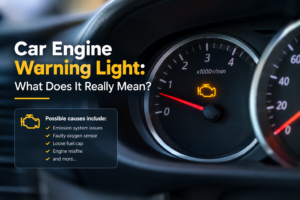
Most modern cars have a dedicated brake warning light, separate from the general engine warning light. This can be triggered by several different issues, including low brake fluid level, worn pads detected by an electronic sensor, or a fault within the anti lock braking system (ABS).
Because the same light can mean several different things, a proper diagnostic check is the only reliable way to identify the exact cause. Our team uses the latest diagnostic equipment to read fault codes accurately and give you a plain English explanation of what is actually wrong, rather than just clearing the light and hoping for the best.
7. Burning Smell When Braking
A sharp, acrid smell after braking, particularly after a long descent or repeated hard stops, usually points to overheating brakes. This can happen when the pads are worn too thin, when a caliper has partially seized and is dragging against the disc even when you are not braking, or simply from sustained heavy use.
Overheated brakes lose effectiveness temporarily and, in more serious cases, can damage the pads, discs, and even the wheel bearings. If you notice this smell, pull over safely, allow the brakes to cool, and get the system inspected before driving further.
8. Disc Scoring, Pitting, and Corrosion
Brake discs are exposed to the elements on every journey, which makes them prone to surface rust and pitting, especially on cars that sit unused for a few days at a time. Light surface rust that clears after a few gentle brake applications is completely normal. Deeper pitting or corrosion is not.
Scoring, meanwhile, happens when worn pad material or debris digs grooves into the disc surface, often as a result of ignoring the grinding noise described earlier. Badly pitted or scored discs reduce braking efficiency and, if severe enough, will cause your vehicle to fail its MOT.
9. Longer Stopping Distances
Sometimes there is no dramatic noise or warning light at all, just a gradual sense that your car takes a little longer to stop than it used to. This is easy to dismiss because it happens slowly, but reduced stopping power is exactly the kind of fault that becomes dangerous in an emergency situation. If your instincts are telling you your brakes feel weaker than usual, trust them and get the car checked.
How Often Should Brakes Be Inspected?
There is no single fixed schedule for brake wear, since it depends heavily on your driving style, mileage, and the roads you typically drive on. However, as a general guide:
- Brake pads typically last between 25,000 and 50,000 miles
- Brake discs typically last between 50,000 and 70,000 miles, though this varies with pad wear and driving conditions
- Brake fluid should generally be replaced every two years to prevent moisture contamination
The safest approach is to have your brakes inspected at every routine service, and always before a long journey. Regular full and interim servicing will typically pick up early signs of pad or disc wear long before you notice a symptom while driving.
What to Do If You Notice a Brake Problem
If any of the signs above sound familiar, the safest next step is a full inspection rather than guesswork. Brake systems involve several interconnected components, and a symptom like a spongy pedal or a pulling sensation can have more than one possible cause. A visual and diagnostic check is the only reliable way to confirm exactly what is going on.
Our brake repairs and replacement service covers a full system check, including pads, discs, calipers, and fluid condition, using OEM quality parts so your car’s warranty and safety are both protected. If your warning light is on or you suspect an ABS related fault, our vehicle diagnostics service can pinpoint the exact issue quickly using the latest OBD equipment.
It is also worth remembering that braking performance is closely linked to your suspension. Worn shock absorbers or bushings can affect how evenly weight transfers under braking, which is why we recommend having your suspension and shock absorbers checked at the same time if your car feels unsettled or bouncy when you stop.
Frequently Asked Questions
Is it safe to drive with squealing brakes?
You can usually still drive short distances safely, but squealing means your pads are nearing the end of their life. Book a check as soon as possible to avoid the problem progressing to grinding, which is far more serious and costly to fix.
Why do my brakes feel spongy after sitting overnight?
This is often caused by moisture in the brake fluid or a very small amount of air in the lines. It is worth having the fluid tested and, if needed, replaced, since old fluid loses its ability to transfer pressure effectively.
Can I replace brake discs without replacing the pads?
It is technically possible, but generally not recommended. Discs and pads wear together, and fitting new discs to worn pads (or vice versa) can lead to uneven contact and reduced performance. Most garages, including ours, recommend replacing them as a pair for consistent, safe braking.
How do I know if it’s my brakes or my suspension?
Noises and vibrations specifically when you press the brake pedal usually point to the braking system. Clunks or bouncing over bumps that happen regardless of braking are more likely a suspension issue. If you are unsure, a full diagnostic check will identify the true cause.
Trust Your Brakes to Mechanic Bournemouth
Brake problems rarely fix themselves, and the longer a warning sign is ignored, the more likely it is to turn into a bigger repair. Our fully qualified, IMI accredited technicians have inspected and repaired braking systems on everything from everyday hatchbacks to performance vehicles across Bournemouth, Poole, and Christchurch for over 15 years.
If you have noticed any of the signs covered in this guide, don’t take chances with your safety. Book your brake inspection today or read more on our blog for further guidance on keeping your vehicle safe and reliable on the road.