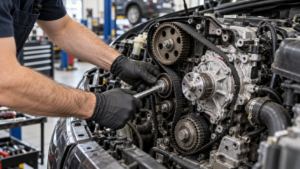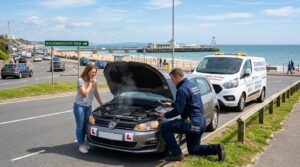
A warning light flickers on the way to work. The engine only clicks when you turn the key. There’s a grinding noise from the brakes just as the school run starts. In moments like these, many Bournemouth drivers ask whether they should call a mobile mechanic or arrange a garage visit.
The answer depends on the fault, the location and how urgent it is. This guide explains exactly when a mobile mechanic is the right call, when a workshop is the better choice, and how to get the best result either way. Knowing the difference saves time, reduces stress and helps keep a small fault from turning into a big one.
The Short Answer
Call a mobile mechanic in Bournemouth when your vehicle has a problem that can be diagnosed or repaired without a lifting ramp or full workshop equipment. Common examples are a car that won’t start, a dashboard warning light, worn brakes, a tired battery, or a service that is due but hard to fit around your day. Choose a garage or recovery service if you need an MOT test, major engine or gearbox work, or the car is unsafe to be near, such as when there is smoke or a fuel leak.
What a Mobile Mechanic Actually Does
A mobile mechanic is a trained technician who arrives in a fully equipped van and works on your vehicle at your home, workplace or roadside. They carry diagnostic equipment, hand tools and the parts most often needed, so many jobs are finished in a single visit, without the vehicle ever going to a garage.
That convenience matters in a busy town like Bournemouth, where commuting, school runs, seasonal visitor traffic and limited parking all compete for your time. You can find out more about the mobile mechanic services we offer before deciding what your vehicle needs.
10 Situations When You Should Call a Mobile Mechanic
1. Your Car Won’t Start
A car that refuses to start is one of the most common reasons to call a mobile mechanic. Typical causes include a flat or failing battery, a faulty starter motor, a weak alternator or a fuel delivery problem. A mobile mechanic can test the electrical system on the spot, work out which of these is at fault and often fix it right where the car is parked. If it is battery related, our battery testing and replacement service can often get you moving again the same day.
2. A Warning Light Appears on the Dashboard
Dashboard lights are your car’s way of asking for attention. As a general rule, a red light means stop safely as soon as you can, while an amber light means the car should be checked soon. A flashing engine management light usually points to a more serious fault, so ease off the accelerator and avoid long journeys. A mobile mechanic can plug in a diagnostic reader, identify the fault code and explain the real cause instead of leaving you guessing. Read more in our guide to car warning lights explained.
3. Your Brakes Feel or Sound Wrong
Squealing, grinding, a soft or spongy pedal, or a car that pulls to one side when you brake should never be ignored. Brake pads and discs can be inspected and often replaced on your driveway. If the brake pedal sinks to the floor or the brake warning light stays on, do not keep driving. Call for help immediately. Our brake repair service covers inspections, pad changes and more.
4. You Hear Strange Noises or Feel Unusual Vibrations
Knocking, rattling, humming or shaking are early signals that something is wearing out. Suspension components, wheel bearings, drive belts and exhaust mounts often announce problems this way. A mobile mechanic can road test where practical, inspect the vehicle and tell you whether it can be fixed on site or needs a workshop.
5. Your Service Is Due but Your Diary Is Full
Routine servicing keeps a vehicle reliable, yet it is also the job people postpone most often. A mobile mechanic brings the service to your home or workplace car park, so you can carry on with your day while the work is done. Details are on our car servicing page.
6. You Have Spotted a Small Fluid Leak
Drips under the car should be checked promptly. Oil, coolant, brake fluid and power steering fluid all mean different things, and some are far more urgent than others. A mobile mechanic can identify what is leaking, find where it is coming from and advise whether the car is safe to drive.
7. The Battery Is Struggling
Slow cranking, dim headlights, a clicking sound or random electrical glitches all suggest the battery or charging system needs attention. Short journeys and stop start traffic along the seafront can drain a battery faster than many drivers expect, and cold mornings often expose a weak one. A quick test tells you whether the battery, the alternator or something else is responsible.
8. You Are Preparing for an MOT
A mobile mechanic cannot carry out the official MOT test itself, because that must be done at an approved testing station. What they can do is check the common failure points beforehand, such as lights, wipers, tyres, brakes and fluid levels, so avoidable problems are fixed before the test. This can make the difference between a smooth pass and a frustrating retest.
9. Your Vehicle Has Been Standing Unused
Cars left sitting for weeks can develop flat batteries, stiff brakes, perished tyres and stale fuel. This is common with holiday lets, second vehicles, students returning from university and drivers coming back from long trips away. A visit from a mobile mechanic gets the car checked and ready before it goes back on the road.
10. You Are Planning a Long Journey
Before a family holiday or a long motorway trip, a pre journey check is worth having. Tyres, brakes, fluids, lights and the battery can all be checked at your door, which is far easier than discovering a fault halfway to your destination.
Local Situations Where Mobile Help Makes Sense in Bournemouth
Driving in Bournemouth has its own challenges, and a few of them make a mobile mechanic especially useful.
- Summer traffic and visitors. Busy seafront roads, slow moving queues and long waits for recovery in peak season make an on the spot repair far more attractive than sitting in traffic waiting for a tow.
- Coastal conditions. Salt in the sea air can encourage corrosion on brakes, exhaust parts and underbody components, so regular checks matter for cars that live close to the coast.
- Tight parking. In areas like Westbourne, Boscombe and Winton, many drivers have no private garage and limited space. A mechanic who works where the car is parked removes the need to move it at all.
- Busy commuter routes. If your car breaks down near the A338 Wessex Way or Poole Road, the quickest safe fix can be a technician who comes to you.
- Students and shift workers. Anyone with an unpredictable timetable benefits from repairs that happen where they already are.
Mobile mechanics like ours also help drivers in nearby areas such as Poole and Christchurch. Check our areas we cover page to see whether we can reach you.
When You Should Not Call a Mobile Mechanic
A good mobile mechanic will always be honest about limits, and so should this guide. Some situations need a fully equipped workshop or emergency services instead:
- MOT testing. This can only be done at an authorised test centre.
- Major engine or gearbox work. Jobs that need a vehicle lift, an engine crane or a controlled workshop are best done in a garage.
- Complex bench testing. Some electrical or component faults need specialist workshop equipment.
- Smoke, fire or a strong smell of fuel. Move away from the vehicle to a safe place and call the emergency services.
- A vehicle stopped in a dangerous position. If you are on a fast road and cannot reach a safe spot, personal safety comes first. Contact the emergency services or your breakdown provider.
If your job falls into one of these categories, a trustworthy mobile mechanic will tell you so straight away and point you in the right direction.
Mobile Mechanic, Garage or Recovery: Which Is Right?
Here is a simple way to decide.
- Choose a mobile mechanic for diagnostics, servicing, brakes, batteries, starter and alternator issues, and most small to medium repairs where the car can stay where it is.
- Choose a garage for MOT tests, heavy mechanical work, and repairs that need a ramp, press or specialist equipment.
- Choose recovery when the vehicle is unsafe to leave, cannot be worked on where it stands, or needs to reach a workshop for a major repair.
Many drivers use all three at different times. The key is matching the job to the right kind of help.
What to Do While You Wait for Help
If your car breaks down before the mechanic arrives, stay calm and follow these steps.
- Switch on your hazard lights and move the vehicle to the safest place you can reach.
- Apply the handbrake and, if the vehicle is on a busy road, get everyone out of the car and to a safe spot away from traffic.
- Note any warning lights, sounds or smells, and when the problem started. This helps the mechanic diagnose faster.
- Have your vehicle registration, make, model and approximate mileage ready when you call.
- Do not attempt repairs on a busy road or in a position where you could be at risk.
How to Prepare for a Mobile Mechanic Visit
A little preparation helps the visit run smoothly.
- Park on a level, safe surface with enough room to open the bonnet and work around the car.
- Clear items from around the wheels and engine bay if you can.
- Keep the service history, locking wheel nut key and any relevant documents to hand.
- Describe the symptoms in as much detail as you can, including whether the fault comes and goes.
- Make sure someone is available to hand over the keys and discuss the findings.
For a full walkthrough, see our guide on how to prepare for a mobile mechanic visit.
How to Choose a Reliable Mobile Mechanic in Bournemouth
Not every operator offers the same standard of service, so a few checks are worthwhile before you book.
- Insurance. Ask whether they hold public liability and appropriate motor trade cover.
- Experience and training. Look for proven experience and relevant qualifications, especially for diagnostics.
- Clear communication. A good mechanic explains the fault in plain language and confirms the work in writing before starting.
- Warranty on work and parts. Ask what is covered and for how long.
- Honest advice. They should tell you what is urgent, what can wait and what is beyond a mobile setup.
- Genuine local reviews. Look for recent reviews that mention punctuality, tidiness and how well the repair held up.
- Professional presentation. A marked van, identification and proper paperwork are all good signs.
The Best Times of Year to Book
Some seasons put more strain on a vehicle than others.
- Autumn and winter. Cold mornings, damp roads and short daylight hours put pressure on batteries, brakes, lights and wipers.
- Spring. A good moment for a full check after the winter months.
- Before summer holidays. A pre trip inspection helps avoid breakdowns on long journeys.
- After long periods of inactivity. Always get a car checked before returning it to regular use.
Frequently Asked Questions
Can a mobile mechanic fix my car at the roadside?
Often, yes. Battery faults, starter problems, some electrical issues and minor mechanical repairs can frequently be handled where the car has stopped. If the job needs a workshop, the mechanic will explain the next step.
Can a mobile mechanic carry out an MOT?
No. An MOT test must be done at an authorised testing station. A mobile mechanic can, however, check your vehicle beforehand and fix common failure items.
Is it safe to have work done outside my home?
Yes, provided the mechanic is properly insured and the vehicle is parked on a safe, level surface. A professional will assess the location before starting.
How long does a typical visit take?
It depends on the job. A battery replacement or quick diagnostic may take under an hour, while a full service or brake job can take a few hours. Your mechanic should give you a time estimate before starting work.
What should I have ready when I call?
Your vehicle registration, the make and model, a description of the symptoms, any warning lights showing and your exact location.
Should I wait until a warning light gets worse?
No. Warning lights are early alerts. Acting sooner usually means a simpler repair and a safer vehicle.
Final Thoughts
Knowing when to call a mobile mechanic in Bournemouth can turn a stressful breakdown into a quick, manageable fix. If your car won’t start, a light is on, the brakes feel wrong or your service is overdue, help can come straight to your door. If the job needs a workshop or a specialist, an honest mobile mechanic will tell you exactly that.
Don’t wait for a small fault to become a bigger one. Get in touch with the team at Mechanic Bournemouth to book a visit or talk through what your car is doing.