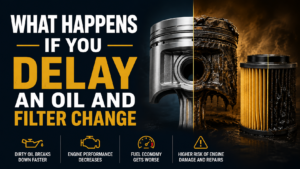
Life gets busy, and a routine oil and filter change is easy to push back a few weeks. The car starts every morning, the engine sounds normal, and there’s no obvious reason to worry. The trouble is that engine oil doesn’t fail loudly. It breaks down quietly in the background, and by the time you notice a problem, your engine may already be paying the price.
If you’ve been putting off your service and want to know exactly what’s happening inside your engine right now, this guide walks through it in plain English, along with the signs that tell you it’s time to book a proper oil and filter change.
Why Oil and Filter Changes Matter in the First Place
Engine oil does far more than keep parts slippery. It carries heat away from the engine, traps dirt and metal particles, and forms a thin protective film between every moving surface inside the block. Every time you start the car, it’s the oil that stops metal from grinding directly against metal.
The filter’s job is just as important. It catches the debris that oil picks up as it circulates, from tiny metal shavings to carbon deposits, so that only clean oil reaches the engine’s internals. Over time, both the oil and the filter lose their ability to do this job properly. Oil thins out and oxidises, while the filter becomes clogged with everything it has trapped.
When you delay the service, you’re not just missing a date on a sticker. You’re allowing both of these protective systems to run past the point where they can actually protect anything.
The Real Consequences of Delaying Your Service
1. Sludge Starts to Build Up
As oil ages, it begins to oxidise and break down chemically. Instead of flowing freely, it thickens into a gel like substance known as sludge. This sludge clings to the inside of the engine, blocking narrow oil passages and starving certain components of the lubrication they need. Once sludge has formed, it’s extremely difficult to remove without a professional flush, and in severe cases it can cause permanent damage to the engine.
2. Friction and Heat Increase
Fresh oil creates a protective barrier between moving metal parts. As oil gets older and thinner, that barrier weakens, allowing more direct contact between components. The result is increased friction, which generates excess heat. Over time, this heat can warp components, wear down bearings, and shorten the life of the entire engine.
3. Fuel Economy Drops
An engine that’s fighting against friction and sludge has to work harder to perform the same job. That extra effort translates directly into higher fuel consumption. Drivers who delay their service for months often notice their car becoming noticeably thirstier, even though nothing else about their driving has changed.
4. The Oil Filter Becomes Restricted
Once a filter reaches its capacity, it can no longer trap new contaminants effectively. In many vehicles, a badly clogged filter forces the system into bypass mode, which allows unfiltered oil to circulate through the engine so that lubrication doesn’t stop completely. Unfortunately, this also means dirty oil is now reaching parts of the engine it was designed to be kept away from, accelerating wear even further.
5. Engine Wear Happens Quietly
Engines rarely announce internal wear with a dramatic noise. Instead, components like the camshaft, timing chain, and bearings wear down gradually over thousands of miles as they run with reduced protection. You might not hear anything unusual for a long time, yet the tolerances inside the engine are slowly loosening. By the time a knocking sound or a warning light appears, meaningful damage has often already taken place.
6. Low Oil Becomes a Bigger Risk
Delaying a service often means delaying oil level checks too. If your vehicle uses a small amount of oil between changes, or has a minor seep, the level can drop lower than expected over an extended interval. Running an engine on low oil reduces its safety margin significantly, particularly during long journeys, hot weather, or heavy traffic where the engine is already working hard.
7. Your Warranty Could Be at Risk
If your car is still under manufacturer warranty, servicing at the recommended intervals is usually a requirement, not a suggestion. Skipping or significantly delaying an oil and filter change can give a manufacturer grounds to reject a warranty claim relating to engine damage, even if the fault seems unrelated to servicing.
Signs You’ve Left It Too Long
Some warning signs are easy to miss if you’re not looking for them. Watch out for:
- A ticking or knocking sound when starting the engine from cold
- Oil that looks unusually dark, thick, or gritty on the dipstick
- The smell of burning oil after parking
- A flickering or illuminated oil pressure warning light
- Noticeably reduced fuel efficiency
- A rougher, louder engine note than usual
None of these signs should be ignored or left for another few weeks. If you’re noticing any of them, it’s worth booking a vehicle diagnostic check alongside your service so a qualified mechanic can rule out any underlying issues before they escalate.
Can You Just Top Up the Oil Instead?
Topping up oil when the level runs low is sensible and helps maintain protection in the short term. However, it is not a substitute for a full oil and filter change. Topping off only adds fresh oil to what’s already in the system, it does nothing to remove the sludge, contaminants, and worn additives sitting in the old oil, and it does nothing for a clogged filter. A proper drain and refill, with a new filter fitted, is the only way to fully reset your engine’s protection.
Does Synthetic Oil Let You Wait Longer?
Synthetic oil is engineered to resist breaking down under heat and stress better than conventional oil, and it generally allows for longer intervals between services. That said, synthetic oil still degrades over time through heat cycles, fuel dilution, and mechanical shearing as it moves through the engine. Whatever oil your vehicle uses, sticking to the manufacturer’s recommended interval remains the safest approach.
What Causes Oil to Break Down Faster
Certain driving habits accelerate the rate at which oil loses its protective qualities, including:
- Frequent short journeys that don’t allow the engine to reach full operating temperature
- Stop and start city driving or regular traffic congestion
- Extended idling
- Towing or carrying heavy loads
- Driving in particularly hot or cold climates
If your driving falls into any of these categories, your engine may need more frequent attention than the standard interval suggests. A qualified mechanic can advise on a schedule that actually suits how you use your car, rather than a generic recommendation.
Why Regular Servicing Pays Off in the Long Run
Compared with major repairs such as replacing a timing chain, piston rings, or an entire engine following years of neglect, an oil and filter change is a small and straightforward piece of maintenance. Keeping to a consistent schedule protects your engine’s internal components, helps maintain fuel efficiency, keeps your warranty intact, and gives you far greater confidence that your car will start and perform reliably whenever you need it.
Pairing your oil change with a wider full or interim service is also a smart way to catch smaller issues, such as worn brake components or a failing battery, before they turn into breakdowns.
Frequently Asked Questions
How far over my oil change interval can I go?
It’s not recommended to exceed your manufacturer’s interval by any significant margin. A few hundred miles may not cause immediate failure, but repeated delays accelerate sludge formation and wear.
Does a dark oil colour always mean a problem?
Not necessarily. Oil naturally darkens as it collects contaminants, which is part of its job. Rapid darkening shortly after a change, however, can be a sign of heavier contamination or a developing issue worth investigating.
Can delaying an oil change cause a check engine light?
It can, particularly on vehicles where sludge or reduced oil pressure affects timing systems or sensors. If your warning light comes on, it’s best to have it checked rather than waiting.
Is it safe to drive with the oil warning light on?
No. If the oil pressure warning light illuminates while driving, you should stop as soon as it’s safe to do so and avoid continuing your journey until the issue has been assessed.
How often should I get an oil and filter change?
This depends on your vehicle, the oil type used, and how you drive. Most manufacturers recommend a service every 12 months or a set number of miles, whichever comes first. Our team can confirm the right interval for your specific vehicle.
Book Your Oil and Filter Change in Bournemouth
Delaying an oil and filter change rarely saves you anything in the long run. The engine keeps working while the oil quietly loses its ability to protect it, and small problems have a habit of turning into much larger ones. If it’s been a while since your last service, our qualified mechanics can take care of it quickly, using the correct grade oil and a new filter for your vehicle.
Get in touch to book your oil and filter change today, or explore our full range of automotive services covering everything from brake repairs to full vehicle diagnostics across Bournemouth, Poole, Christchurch, and the wider Dorset area.