There is nothing quite like the sinking feeling of turning the key on a dark, cold morning and hearing nothing back. No engine turnover, no ignition, just a faint click or complete silence. In most cases, the culprit is exactly what you would guess: a car battery that has quietly reached the end of its life.
The good news is that a car battery almost never fails without warning. It gives you weeks, sometimes months, of small clues before it finally leaves you stranded. Learn to read those clues and you will never be caught out again.
At Mechanic Bournemouth, we replace batteries every week for drivers across Bournemouth, Poole, Christchurch, and Ringwood. In this guide, our IMI accredited technicians share exactly what to look for, how to test your battery yourself, and when it is time to book a professional replacement. It is everything you need to spot a failing battery before it becomes a breakdown.
How Long Does a Car Battery Actually Last?
Most modern car batteries have a working life of three to five years, though this depends on your driving habits, the climate you live in, and the type of battery your vehicle uses.
Several things shorten that lifespan considerably:
- Frequent short journeys that never allow the battery to fully recharge
- Extreme cold or hot weather (British winters take a particularly heavy toll)
- Long periods of the vehicle sitting unused, such as over the Christmas holidays
- Aftermarket accessories left plugged in, such as dashcams or phone chargers
- Faults elsewhere in the charging system, particularly a failing alternator
- Modern stop start systems, which cycle the battery far more heavily than older cars
If your battery is over three years old and you are noticing any of the warning signs below, it is worth having it professionally tested before winter hits.
10 Warning Signs Your Car Battery Needs Replacing
1. Slow or Sluggish Engine Cranking
This is the single most reliable early warning sign of a failing battery. When you turn the key or press the start button, a healthy battery should crank the engine over quickly and crisply. If the engine sounds like it is struggling, dragging, or taking noticeably longer to catch than usual, the battery is losing its ability to deliver the current the starter motor needs.
A sluggish crank on a mild autumn morning is a strong predictor of a no start on a cold January morning. Do not ignore it.
2. The Battery Warning Light on Your Dashboard
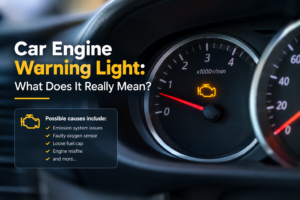
That little battery shaped icon on your dashboard is not just decorative. It illuminates when your car’s charging system is not maintaining proper voltage, which usually means either the battery itself, the alternator, or the wiring between them is at fault.
If the light comes on and stays on, book a diagnostic check as soon as possible. Our vehicle diagnostics service in Bournemouth can pinpoint whether the fault is with the battery or elsewhere in the charging system in a matter of minutes.
3. Dim or Flickering Headlights
Your battery powers the electrical system whenever the alternator is not producing enough output on its own, such as at idle. If your headlights dim noticeably when the engine is idling, brighten when you rev, or flicker as you accelerate, the battery is struggling to hold a steady voltage.
The same goes for your interior and dashboard lights. Anything that flickers or looks dimmer than it used to is worth taking seriously.
4. Electrical Gremlins and Slow Accessories
Modern cars are packed with electronics that demand a steady, stable voltage. When the battery starts to weaken, those systems are often the first to complain.
Watch for:
- Power windows that move more slowly than they should
- Central locking that hesitates or stops working intermittently
- Infotainment systems that reboot on their own
- Heated seats or heated screens that seem underpowered
- A radio that cuts out or resets
These small quirks are easy to dismiss individually. If several are happening at once, they add up to a battery that cannot supply enough clean voltage.
5. You Have Needed to Jump Start Recently
An occasional flat battery after leaving your lights on is one thing. Needing a jump start more than once, especially when you cannot pin down a clear reason, is a serious red flag.
A healthy battery should recharge itself fully while you drive. If yours is dying overnight, or after only a few days sitting on the driveway, it has almost certainly lost its ability to hold a charge and will need replacing.
6. Corroded Battery Terminals
Open your bonnet and take a look at the two terminals on top of the battery. If you spot a white, blue, or greenish crusty powder around them, that is corrosion, and it is a common cause of both starting problems and shortened battery life.
Corrosion interrupts the flow of electricity between the battery and the rest of the car. In some cases, cleaning the terminals and applying a protective grease will restore the connection. In others, particularly if the corrosion keeps returning, it points to a battery that is leaking or venting internally and is on its way out.
7. A Swollen or Bulging Battery Case
If the sides of the battery case look bloated, warped, or distorted, do not ignore it. A swollen battery is the result of overcharging or extreme heat causing gases to build up inside the case.
This is a serious safety hazard. A swollen battery can leak acid or, in rare cases, rupture. Do not try to jump start or charge it. Have it professionally removed and replaced as soon as possible. Our team offers safe battery replacement in Bournemouth, including responsible disposal of your old unit.
8. A Rotten Egg or Sulphur Smell Near the Battery
If you notice a smell like rotten eggs when you open the bonnet, that is hydrogen sulphide gas escaping from the battery. It usually means the battery is being overcharged, that its internal chemistry has broken down, or that it is leaking.
This is both a warning sign and a hazard. The gas is flammable in enclosed spaces, so ventilate the area, avoid creating any sparks, and book a professional inspection straight away.
9. The Battery Is More Than Three or Four Years Old
Even if your car still starts perfectly, age alone is a warning sign. Once a battery passes the three year mark, its performance quietly starts to decline. Cold snaps and long periods of inactivity will find weaknesses that were not obvious in summer.
If you are not sure how old your battery is, check the manufacture date stamped on the top or side of the case. If it is over four years old and shows any of the other symptoms on this list, replacing it before it fails will save you the stress of a roadside breakdown.
10. Frequent Short Journeys and No Long Runs
This one is more of a lifestyle warning than a symptom, but it still matters. If your car mostly does school runs, quick trips to the shops, and short commutes, the alternator never has enough time to fully recharge the battery. Over months and years, this slowly discharges the battery and shortens its life significantly.
The fix is simple: take the car for a proper thirty minute drive every week or two, especially through the winter. If you cannot, a battery health check every six months is a smart insurance policy.
How to Test Your Car Battery at Home
If you own a basic digital multimeter, you can perform a quick voltage test on your battery in under five minutes. Here is how to do it safely.
Step 1: Turn off the engine and remove the keys from the ignition. Let the car sit for at least an hour so any surface charge dissipates. This gives you a true “resting” voltage reading.
Step 2: Open the bonnet and locate the battery. Set your multimeter to DC voltage (usually marked as DCV or a V with a straight line above a dashed line).
Step 3: Touch the red probe to the positive (+) terminal and the black probe to the negative (‑) terminal.
Step 4: Read the voltage displayed.
Here is what the numbers mean:
| Voltage Reading | Charge Level | What It Means |
| 12.6V and above | 100% | Battery is fully charged and healthy |
| 12.4V to 12.6V | Around 75% | Battery is in good working condition |
| 12.2V to 12.4V | Around 50% | Battery is low and needs charging soon |
| 12.0V to 12.2V | Around 25% | Battery is significantly discharged |
| Below 12.0V | Under 25% | Battery is very likely faulty and needs replacing |
For a more accurate picture, you can also test the voltage with the engine running. It should read between 13.7V and 14.7V. If it reads lower than 13.7V while the engine is on, your alternator is not charging the battery properly, and no amount of replacing batteries will solve the problem until the alternator is fixed.
Why a Voltage Test Is Not Always Enough
A basic voltage test tells you the battery’s state of charge at that moment. What it cannot tell you is how the battery performs under real world load, when the starter motor is drawing hundreds of amps to crank the engine.
That is why a battery can pass a voltage test one morning and still fail to start the car the next. Professional load testing and conductance testing measure the battery’s actual state of health, giving you a far more reliable answer. If you have any doubts about your battery, or if it has passed the three year mark, professional testing is the smart next step.
Is It Really the Battery? Symptoms That Look Like Battery Failure but Are Not
One of the most frustrating mistakes drivers make is replacing a battery that was never actually the problem. Several other faults can produce almost identical symptoms:
- A faulty alternator. If the alternator is not charging the battery while you drive, even a brand new battery will go flat within a day or two. A quick way to check: if a jump start gets the car running but the engine dies again as soon as you disconnect the leads, the alternator is a likely suspect.
- A failing starter motor. A starter motor drawing too much current, or failing to engage, can mimic a flat battery. You will often hear a single loud click rather than the typical dying crank.
- Corroded or loose battery cables. Poor connections increase resistance and cause the exact symptoms of a weak battery, even when the battery itself is perfectly healthy.
- A parasitic drain. Something in the car (a faulty relay, a stuck module, an aftermarket accessory) is drawing power when the ignition is off, quietly draining even a new battery overnight.
This is why we always recommend a full charging system diagnostic before fitting a replacement. It takes very little extra time, and it makes sure you fix the actual problem, not just the symptom. If you would like to read more about the underlying causes, our guide to the most common car battery problems and their solutions covers each of these in detail.
When to Book a Professional Battery Check
Any of the following are signs it is time to stop guessing and get a proper diagnostic:
- Your battery is more than three years old and has not been tested
- You have needed a jump start in the last few weeks
- The battery warning light has appeared, even briefly
- You are noticing several of the electrical symptoms above at once
- Your car has been sitting unused for an extended period
- Winter is on the way and you are not confident the battery will make it through
Getting checked now is far easier than getting recovered from a supermarket car park later. At Mechanic Bournemouth, our IMI accredited technicians use professional battery and charging system testers to give you an accurate picture of your battery’s real health. If it needs replacing, we supply and fit the correct type for your vehicle, including AGM and EFB batteries for stop start systems, and register the new battery to your car’s ECU where required.
If you cannot get the car to us, our mobile battery replacement service covers Bournemouth, Poole, Christchurch, Ringwood, and the wider Dorset area, so we can come to your home or workplace and fit a new battery on the spot.
How to Extend the Life of Your Current Battery
Even a healthy battery benefits from a little care. These simple habits will help you get the most out of yours:
- Take your car for a proper drive of at least thirty minutes every week or two
- Turn off the lights, heated screens, and other electrics before switching off the ignition
- Unplug dashcams, phone chargers, and other accessories when parking for extended periods
- Keep the battery terminals clean and free of corrosion
- Use a trickle charger if the car is going to sit unused for more than a couple of weeks
- Get the battery tested annually, ideally as part of your full or interim service
None of this is complicated, but together it can add a year or more to the life of your battery.
Do Not Wait for a No Start Morning
A car battery gives you plenty of warning before it fails. The drivers who get caught out are almost always the ones who noticed the slow crank, the dim lights, or the flickering dashboard, and put off doing anything about it.
If any of the signs in this guide sound familiar, book a quick battery health check with us. It takes a few minutes, it gives you a definite answer, and it can save you a very inconvenient breakdown.
Contact Mechanic Bournemouth today or call us on +44 7739 393911 for honest, expert advice and same day battery testing across Bournemouth, Poole, Christchurch, and Ringwood.
Frequently Asked Questions
How often should I get my car battery checked?
Once a year is a sensible minimum, ideally ahead of winter. If your battery is over three years old, or if you have noticed any of the symptoms above, every six months is a better rhythm.
Can I test my battery without a multimeter?
You can check for the obvious visual signs (corrosion, swelling, age) and pay attention to how the car cranks, but you cannot get a reliable reading without either a multimeter or a professional tester. If you want certainty, book a battery health check.
Why does cold weather affect my battery so much?
Cold slows down the chemical reactions inside the battery, reducing the current it can deliver. At the same time, cold engines demand more power to crank. A battery that is already weak often fails on the first properly cold morning of the year.
Should I replace the battery myself?
On older cars, a straightforward swap is possible if you know what you are doing. On modern vehicles, particularly those with stop start technology, the new battery often needs to be registered to the car’s ECU using diagnostic equipment. Getting it wrong can cause charging faults and early failure of the new battery.
Do electric and hybrid vehicles still have a 12V battery?
Yes. Even fully electric vehicles use a small 12V battery for their electronics, and it can go flat just like any other. Hybrids are especially vulnerable if left standing unused.
My car started fine this morning, does that mean the battery is healthy?
Not necessarily. A battery can start the engine perfectly one day and fail completely the next, particularly if it is old or the weather turns cold. If the warning signs are there, do not rely on today’s start to predict tomorrow’s.